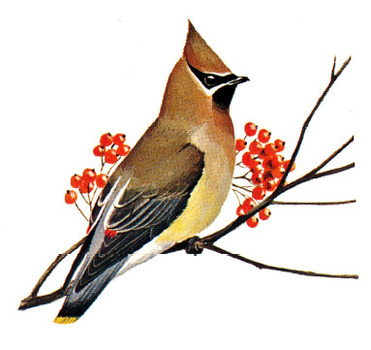
Cedar Waxwing
Bombycilla cedrorum
Waxwing family (Bombycillidae)
A small songbird. Sleek crest on head. Overall grayish-brown plumage, black face mask edged with white, pale yellow belly feathers, red waxy tips on wing feathers.
Nesting:
Nests in dense shrubs or small trees. Eggs are pale with dark marks. Clutch size – 4 eggs.
Voice:
Call is a series of buzzy or trilled high-pitched notes. Often heard calling in flocks.
Name Origin:
The genus name Bombycilla is from the Greek or Latin for “silky tail.” The species name cedrorum is from the Latin for “of the cedars.” The common name “waxwing” refers to the bright red waxy tips of their wing feathers.
In the Nature Park:
Year-round resident.
Photos:
Cedar Waxwing