Eastern Bluebird
Sialia sialis
Thrush family (Turdidae)
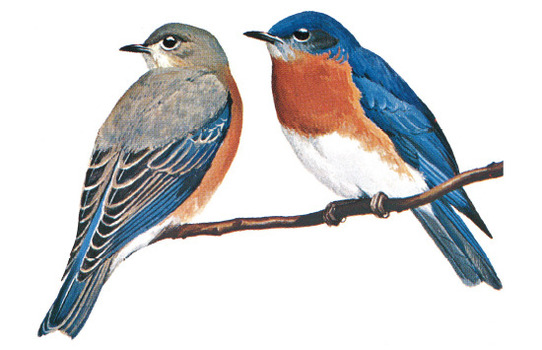
A small thrush. Male has a bright blue back. Female has a grayish back. Both male and female have an orange throat, neck, breast, and flanks, and a white belly.
Nesting:
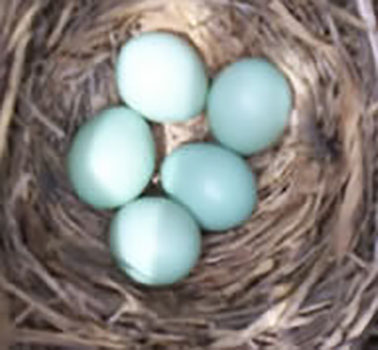
Cavity nester. Nests in cavities of dead trees or artificial nest boxes. Eggs are pale blue. Clutch size – 3 to 6 eggs.
Voice:
Song is a soft but musical series of downslurred low-pitched whistles, “tury cherwee cheye-ley,” Call is a mellow “turwee.”
Name Origin:
The genus and species name Sialis sialis is from the Greek for “a kind of bird.”
In the Nature Park:
Year-round resident.
Photos:
Eastern Bluebird female (left) and male (right)
Eastern bluebird eggs
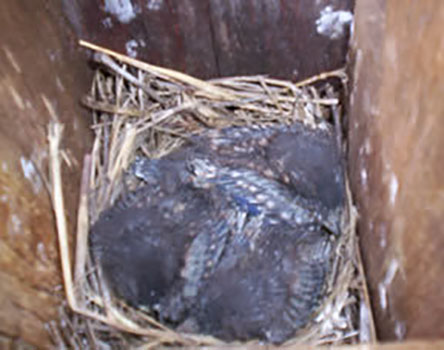
Eastern bluebird nestlings