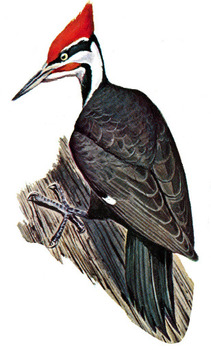
Pileated Woodpecker
Dryocopus pileatus
Woodpecker family (Picidae)
A large woodpecker. Mostly black with a bright red crest. In flight, white on linings of underwings visible. Long and broad bill with a chisel-like tip.
Habitat:
Mature forests
Nesting:
Nests in cavities in large dead trees. Eggs are white. Clutch size – 4 eggs.
Voice:
Loud series of “cuk” notes, “cuk cuk cuk cuk.” Call is similar to Northern Flicker but Pileated Woodpecker's notes are louder and vary in pitch, almost having a ringing or echoing nature through the woods.
Name Origin:
The genus name Dryocopus is from the Greek for "tree dagger." The species name pileatus is from the Latin for “capped.”
In the Nature Park:
Year-round resident.
Photos:
Pileated Woodpecker