East College is DePauw’s most iconic and quintessentially collegiate building. The steep French mansard roof, Italianate columns and Gothic arches blend to cut a striking architectural figure in the center of campus. The cornerstone was laid in 1870. Originally called “The Edifice,” it was the first significant academic building of what was then called Indiana Asbury University. The building’s size, structure and design symbolized the university’s ambition to become an important center of higher education. As the campus expanded, buildings needed new names, and the Edifice became “East College.” The building once housed almost everything – classrooms, chapel, the library and, for a short time, a telescope in its East tower. Meharry Hall, a chapel located on the second floor of East College, features a high ceiling, wooden pews, a pipe organ and a picturesque balcony. It was designed to be “one of the most elegant audience rooms in the West.”
History & Traditions
More than 180 years of educating leaders in disciplines as diverse as the sciences, government, the arts, business and music.
DePauw University was founded in 1837 by the Methodist Church. Originally called Indiana Asbury University in honor of Francis Asbury, the first American bishop of the Methodist Episcopal Church, the school was envisioned by its founders to be an ecumenical institution of national stature that would be “conducted on the most liberal principles, accessible to all religious denominations, and designed for the benefit of our citizens in general.”
Residents of Greencastle, Indiana, were eager for the university to be located in their frontier village and raised $25,000 – then a huge sum – to entice the founders. The Indiana General Assembly granted a charter establishing the university on January 10, 1837, and the cornerstone of the first building was laid later that year.
The school began with one professor and five students. Three years later, Matthew Simpson, a friend and counselor of Abraham Lincoln, was inaugurated as the first president and the first class was graduated.
Indiana Asbury grew quickly, although many men left the university to fight for either North or South during the Civil War. Women were admitted in 1867.
When the university experienced financial difficulties in the 1860s, its leaders turned to businessman and philanthropist Washington C. DePauw, one of the richest men in Indiana and a devout Methodist who had contributed money to Indiana Asbury. DePauw had made arrangements in his will for a Methodist university to be established after his death. Urged by Indiana Asbury trustees to divert his bequest to the school, DePauw did so and the trustees changed the school’s name to DePauw University.
DePauw is an innovator and host to a number of regional and national firsts. DePauw has Indiana's first Phi Beta Kappa chapter. It is home to the first sorority in the nation, Kappa Alpha Theta (1870) and the Alpha chapter of Alpha Chi Omega. The journalistic honorary, Sigma Delta Chi, which later became the Society of Professional Journalists, was founded by DePauw students. And DePauw is home to the first collegiate FM radio station in the country, first hitting the airwaves in 1949. And lastly, The DePauw, DePauw's student-managed newspaper, is the oldest college newspaper in the state.
Notable DePauw History & Traditions
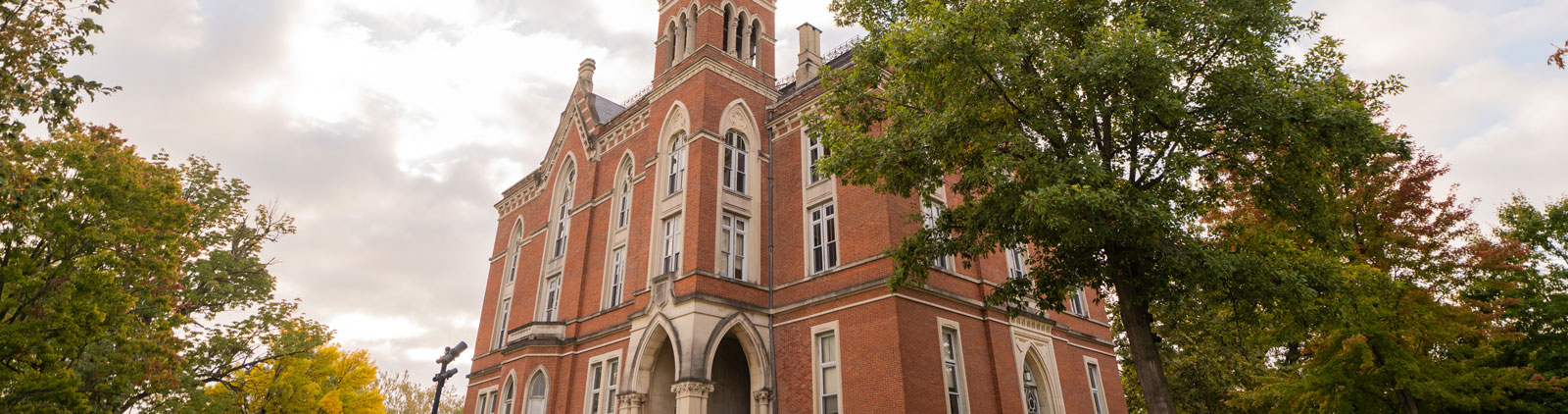
East College
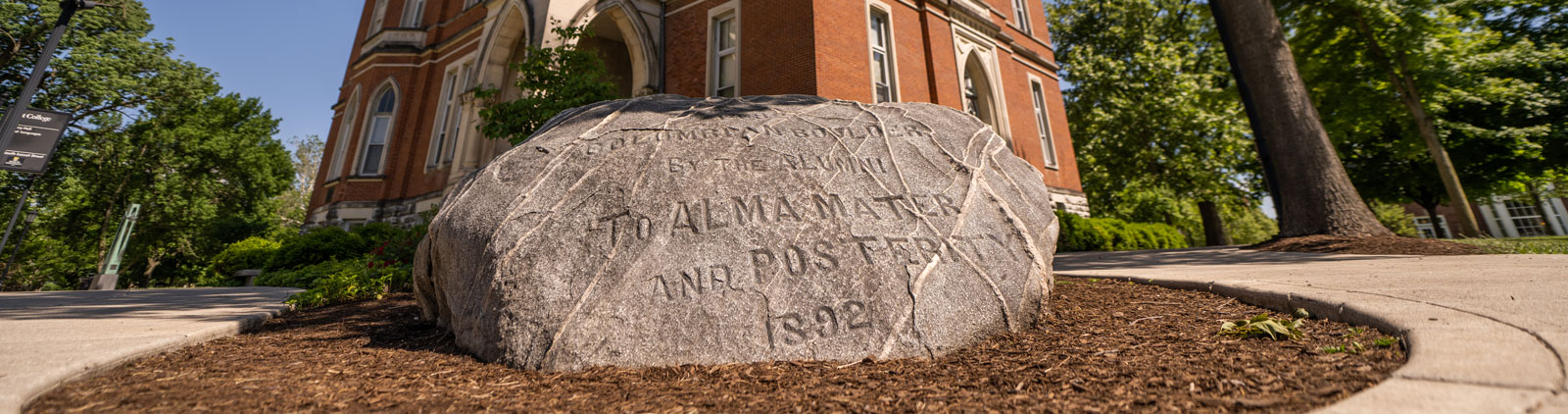
The Boulder
A massive granite boulder, given to DePauw in 1892, lies in front of East College and serves as an iconic gathering spot for DePauw students. Inscribed and known as the Columbian Boulder, it bears an inscription recognizing the 400th anniversary of Christopher Columbus’s first voyage to the new world. Farmer Hiram Thomas found the boulder about 12 miles northeast of Greencastle and moved it to his farm, where he charged visitors 10 cents to view what he described as a petrified turtle. A few alumni bought the boulder from Thomas and delivered it to campus via the Monon Railroad and a wagon drawn by 26 horses. The Boulder’s place in campus lore was further cemented in the 60s and 70s as it became the destination of streaking ‘Boulder Run’ participants on the occasion of the year’s first snowfall.
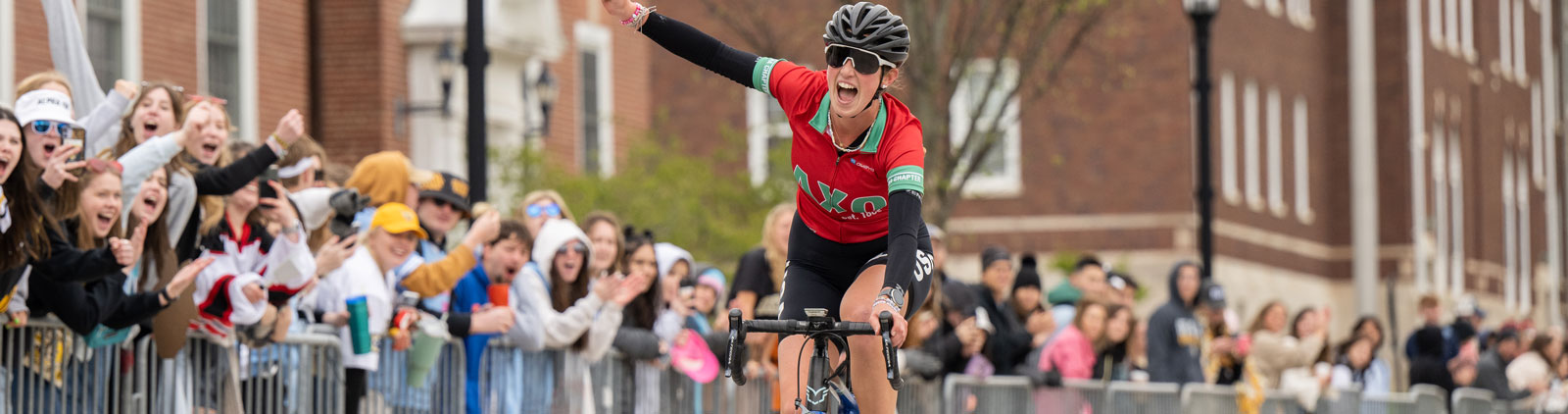
Little 5
Held in late April every year, DePauw’s Little 5 bike race has been a campus tradition since 1956, when the Union Board sponsored a men’s race as a fundraiser for the American Cancer Society. It began on the streets of Greencastle, then moved to Blackstock Stadium for a relay-style race and today is back on the streets. In the current iteration of Little 5, men, women and alumni compete and cooperate in a weeklong celebration that ushers in spring. Racing begins with a time trial, continues with street sprints and concludes with criterium (mass start) races that follow a ½ mile course through campus streets. Other events, including campus-wide fundraisers, a trike race, food trucks and social gatherings round out the spirited week.
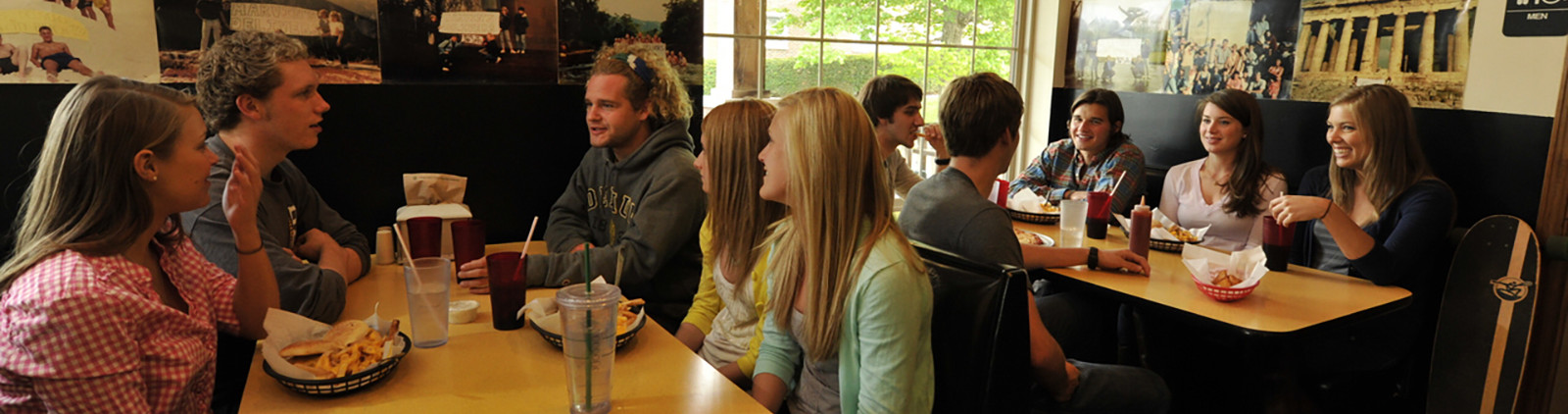
Marvin's
Marvin’s is the home of the famous garlic cheeseburger, known everywhere as “The GCB”. The restaurant, located at 202 S. College Ave., also serves fries, pizza and burritos. Perhaps most to students’ liking, Marvin’s delivers at nearly any time of the night. Over the years, students have captured their love for this DePauw institution, photographing hand-made “Marvin’s Delivers” signs at exotic locations around the world. Prior to social media, Marvin’s achieved fame and adoration for wallpaper made almost exclusively of Marvin’s Delivers photos and prints from fraternity and sorority social functions.
The Monon Bell Classic
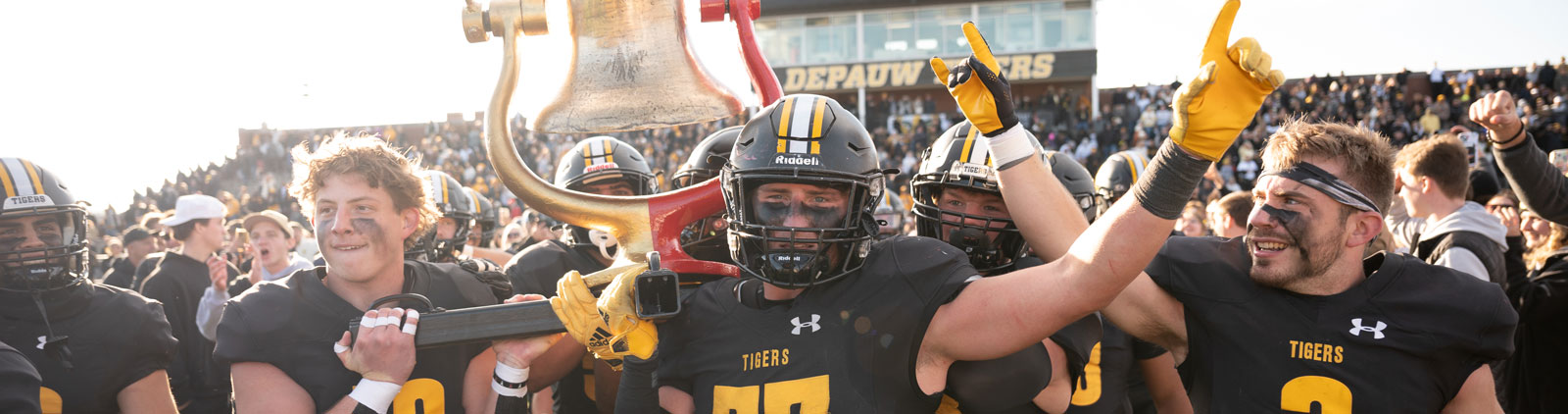
DePauw’s most intense athletic rivalry is the Monon Bell football game against the Wabash College Little Giants. The rivalry, which began in 1890, has been featured in national print outlets and broadcast on ESPN, ABC, HDNet and the Indiana Sports Network. The matchup was featured in season three of The Rivalries - an NCAA/LG electronics docu-series celebrating college sports greatest rivalries. In addition to a virtually guaranteed sell-out each year, the game is broadcast to dozens of alumni satellite parties across the nation. The Monon Bell trophy, a 300-pound locomotive bell from the Monon Railroad, was introduced in 1932. The game’s victor holds the bell on its campus until the next game. DePauw and Wabash are only 27 miles apart, so the adversaries in the game are often brothers, cousins, high school classmates or good friends, adding to the competition’s intensity.
Old Gold Weekend
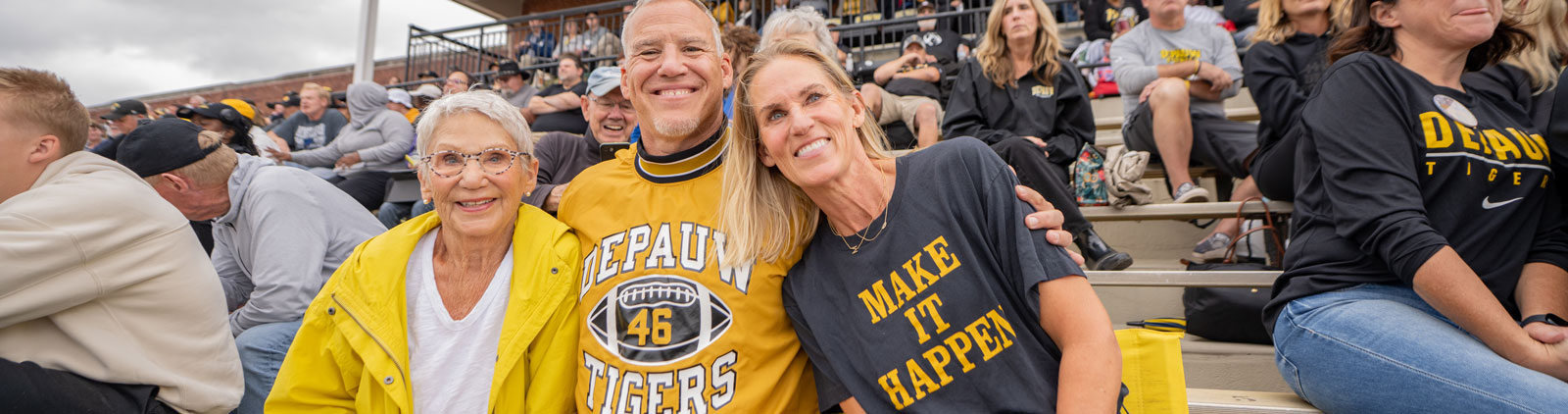
Old Gold Day was created in 1907 as a way to stop the increasingly violent freshman-sophomore class scraps over possession of the opponent’s flag and claims of ownership of the Boulder. The first such event began with chapel at 8:30 a.m., followed by interclass games and varsity football. Other events continued throughout the day, which concluded with a meeting in Meharry Hall at which the varsity football players were awarded D appliques for their letter jackets. The event evolved, and by 1919, it had become what it is today – an entire homecoming weekend of events that include arts performances, tailgating, a football game, crowning of a homecoming queen and king and banquets and parties held by Greek houses to welcome their alumni back to campus.
Student Media
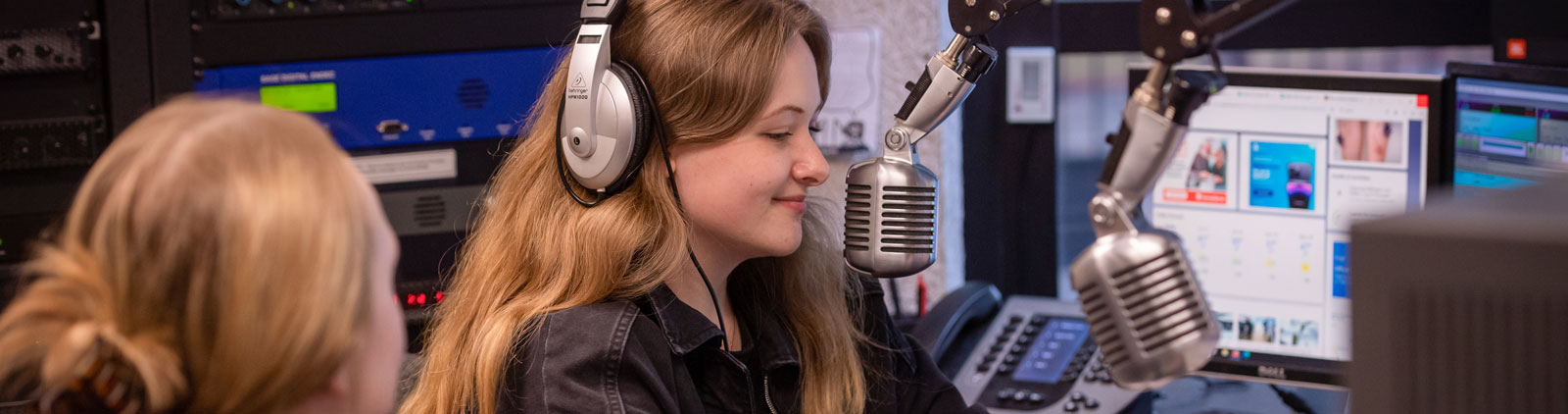
DePauw produces leaders in the field of journalism. While we don’t have a journalism major, our track-record shows the preparation we provide for the field is highly effective. Outstanding students from English, communication and other liberal arts majors benefit from our unique combination of liberal arts coursework, student media experiences, internships and an extensive worldwide alumni network of professional journalists. DePauw is home to the Pulliam Center for Contemporary Media which houses The DePauw (Indiana’s oldest college newspaper), WGRE (the first 10-watt educational radio station licensed by the FCC) and D3TV (an internet-distributed campus television station). The Pulliam Center is also home to DePauw’s highly-regarded Media Fellows program. DePauw students receive a number of awards for excellence in journalism from professional associations each year. The Society of Professional Journalists was founded on the DePauw campus in 1909.
The Rector Scholarship
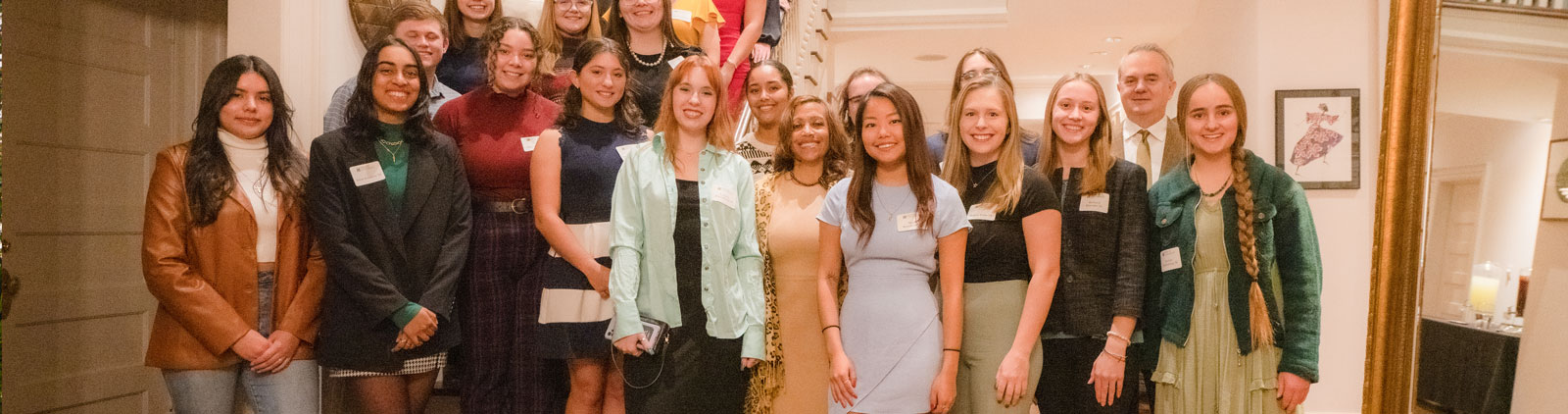
The Rector Scholarship is DePauw’s oldest and preeminent merit academic award. Since its beginning in 1919, more than 4,000 graduates have earned Rector scholarships, and many recipients are among DePauw’s most distinguished and honored alumni. Edward Rector described his gifts to the university as “investments in humanity, in the men and women who are to carry on the work of our country and the world when you and I are gone.”
Anderson Street
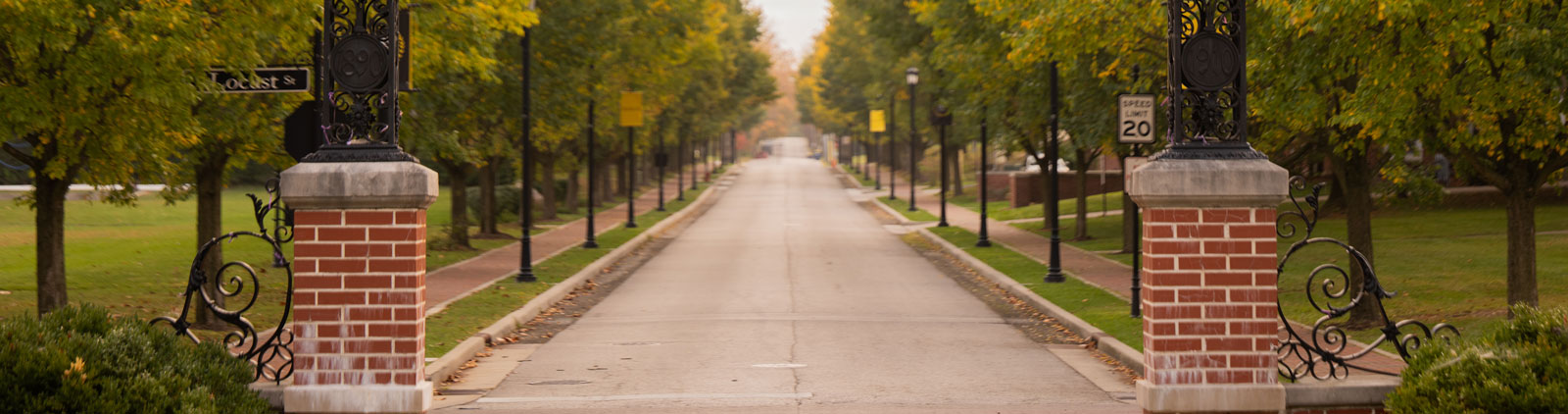
Anderson Street is the east entry to campus from US highway 231. This symbolic threshold is marked by the Hoover Gates, a beautiful architectural feature added in 2012. The gates are named in honor of R. David and Suzanne Hoover (both class of 1967) Brick-lined Anderson Street terminates at The Arch, which connects Anderson Street to a formal pedestrian entryway that opens onto the East College lawn. The ornamental arch features the letters “DPU” at its peak. It was a gift of the class of 1890 and was erected in 1910. It is an essential landmark pass-through during opening week march and commencement ceremonies.