Research at DePauw
What discoveries will you make?
From year one at DePauw, students are encouraged to partner with faculty and peers to put ideas and theory into practice. While work in a science lab is often the stereotypical example of research, DePauw students also conduct research across the humanities and social sciences. Here, you do not have to wait behind graduate students or Ph.D. candidates for research opportunities.
How does DePauw support student research through faculty mentorship?
DePauw students who participate in research are joined by a faculty mentor who leads or guides the exploration. Students may also contribute to an ongoing student-run project or pursue their own research with faculty sponsorship. Whether in collaboration with others or independently, research at DePauw helps students deepen their understanding of their interests and the world they inhabit.
What does student-faculty research look like at DePauw?
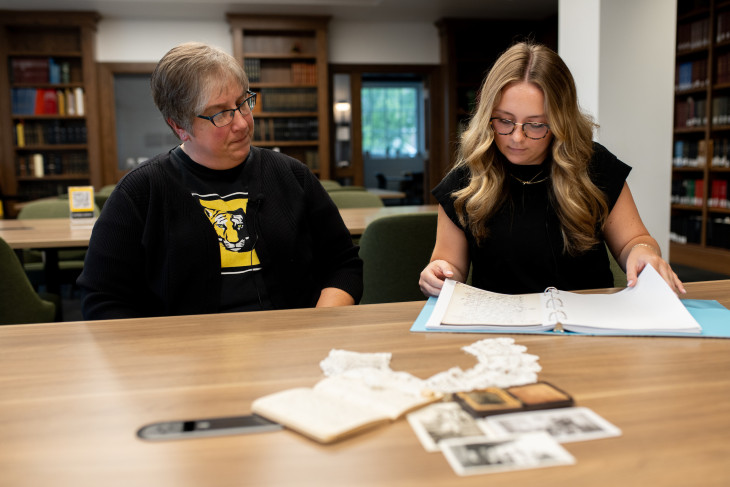
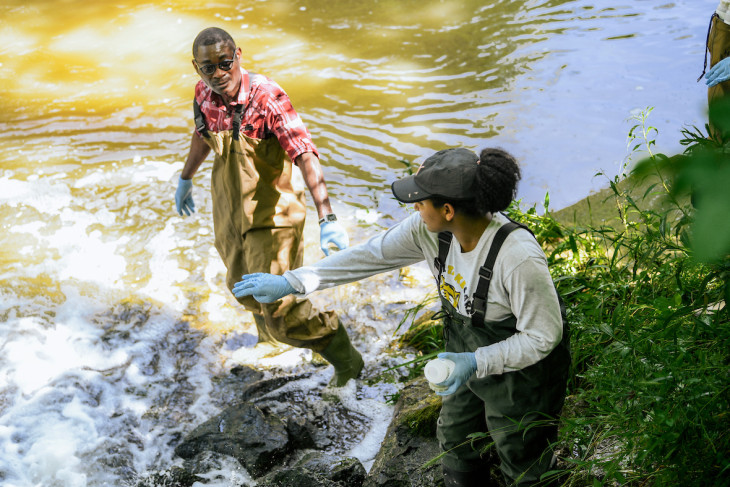
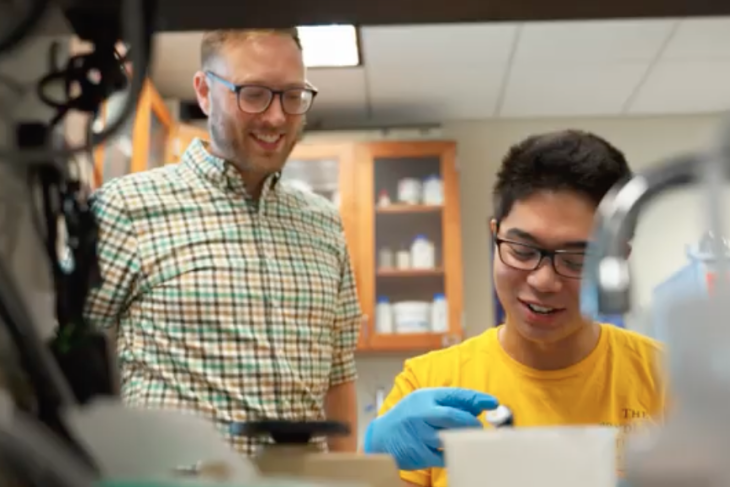
These stories highlight just a few of the research opportunities available at DePauw. A profile that features emerita library professor Caroline Gilson and her student shows that your research options extend beyond the science lab. Other stories highlight summer research that takes students to the lab, to outdoor settings and to academic conferences, where they present their work.
DePauw Student Research at-a-glance
- Close interaction with faculty. DePauw’s 11:1 student-to-faculty ratio.
- Abundant opportunity. More than 30% of our students participate in research.
- Summer research stipends may be available.
- Support from the Asher Office for Undergraduate Research, Scholarship and Creative Activity.
- Integration with DePauw honors and fellows programs including Science Research Fellows, Honor Scholar, Media Fellows and more.
- Access to DePauw’s distinctive academic centers including the Tenzer Technology Center, Pulliam Center for Contemporary Media and Prindle Institute for Ethics.
- Strong placement in top graduate programs.
Through research, you will learn to apply the breadth of your knowledge to a topic you find deeply interesting. You will develop your abilities to work independently and as a member of a team. And you will learn how to read and understand primary sources and develop critical thinking and analytic skills that will serve you well in graduate school and the professional world. Undergraduate research at DePauw provides strong preparation while also deepening relationships with faculty mentors.
Research at DePauw, Frequently Asked Questions
Yes. Funding is available for students who present at conferences. The Hubbard Center and some departments also maintain small pools of funding for students who wish to attend a conference without presenting. See the funding section of this website for more details.
You might be thinking research is restricted to upperclassman. It's not! As a DePauw undergraduate, you may do research at any point during your time here. Some projects are better suited to different times during your education, but it’s not always obvious from the outside. Don’t rule anything out without having conversations with mentors and advisers.
Yes. While programs like the expanded Science Research Fellows program provide a scaffolded pathway to help students develop research skills, you may want to get involved in research without completing a full fellows or associates program.
Research opportunities like summer research or winter term research teach DePauw undergraduates how to manage an independent research timeline, troubleshoot methodological challenges and produce original work under deadline. These are critical skills for graduate programs.
No! Even though working in a science laboratory is the example of research that comes to mind for most people, undergraduate research can be done in any discipline including the humanities. You should consider what your interests are and investigate options in the most likely areas. You can reach out to faculty members in your major or to faculty and staff across campus to work on interdisciplinary projects.
No! You may do research in any area. For many students, their deepest interests lie in their major, and thus it is most common for students to do research in their major. However, as a liberal arts school, we encourage students to explore and synthesize multiple areas of interest.
“My DePauw research experience encouraged me to declare biology as my major and pursue it seriously instead of just something I was interested in." Sahit L. '28
Yes. Students work with faculty members during both the academic year and the summer. During the academic year, progress on the project will likely be slower since both faculty and students have obligations to their course work. There is also limited funding available for students who work on projects during the summer. Some students combine academic-year and summer work for even deeper engagement.
Yes. In many cases, students can earn .25 - 1 course credits for research projects during the academic year; however, in those cases you should talk with your faculty sponsor and academic advisor to ensure that you're not over-enrolled for the semester. For summer research, students can apply for Extended Studies credit.
The opportunity for students to work collaboratively with faculty members on research, scholarly, and creative activities is a valuable component of a liberal arts education. Whenever possible, DePauw University seeks to provide either academic credit or monetary compensation to students who engage in these activities. There are times, however, when a student is eager to pursue an opportunity for more informal collaboration for which neither credit nor funding is available. Although DePauw generally discourages these "voluntary" activities, exceptions may be made where possible, with approval from the Office of Academic Affairs, which will consult with Human Resources and Risk Management. Approval of voluntary collaboration between students and faculty members during the summer does not grant students access to University housing.
Yes. Funding is available for students who present at conferences. The Hubbard Center and some departments also maintain small pools of funding for students who wish to attend a conference without presenting. See the funding section of this website for more details.
"They challenged me in a way that would really help me to think. And the presentation went really well. I'm learning a lot from other people.” Amerti Guta '23
Yes. It is important that you check the IRB website to determine whether your project requires approval from the IRB. This committee can also provide you with additional support for your research design, if you wish. However, concern about IRB approval should not prevent you from trying to identify research opportunities.The IRB process is something that is often worked through in collaboration with your faculty mentor.
Research Office at DePauw
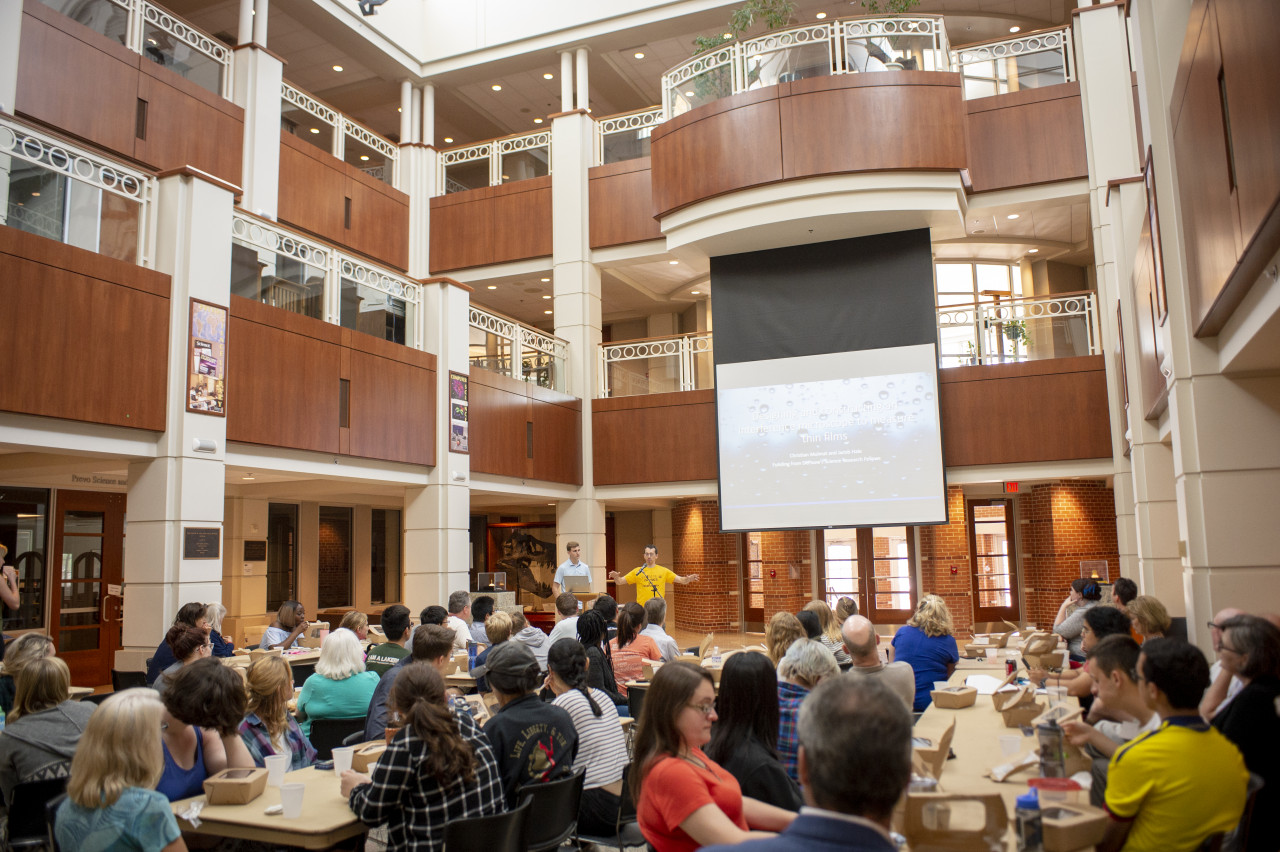
Learn more about the opportunities available to you through The Asher Office of Undergraduate Research, Scholarship, and Creative Activity.
Read More