Button Menu
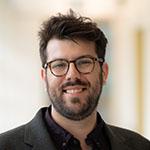
portrait

Elliott Reichardt

Assistant Professor of Anthropology

elliottreichardt@depauw.edu

Statement on Scholarly or Artistic Work

Howdy! I am a sociocultural and environmental anthropologist who studies the politics of land, health, and resource extraction. I am an Assistant Professor of Anthropology at DePauw University.

My first book project, The Second Growth: Indigenous Resurgence, Settler Adaptation, and the Possibility of Repair in the Log Lands of the Canadian North, emerges from sixteen months of ethnographic fieldwork with logging companies, Dakelh First Nations hunters, elders, and forestry officials, complemented by archival, oral-historical, and GIS analyses. It traces how forestry transformed Dakelh forests into “log lands” and how Nak’azdli Whut’en and Binche Whut’en leaders negotiate “reconciled logging practices” to reclaim authority over their territories. My paper Reconciliation Capitalism recently won Harold K. Schneider Student Paper Prize in Economic Anthropology. Working in partnership with these communities, I co-designed the research questions, established oversight committees, and continue to return annually to maintain accountability and reciprocity; since 2023 I have also helped with the Binche Dakelh science summer camp.

I am currently in the early stages of developing my second book project, tentatively entitled The Ecology of Toxicity: An Ethnography of Uncertainty, and Harm in New Brunswick in New Brunswick, Canada which examines the emergence and response to the New Brunswick neurological syndrome of unknown cause in Eastern Canada.

My broader scholarly interests span environmental anthropology, Indigenous studies, political economy, and medical history. I have written on Indigenous sovereignty, colonial law, and “reconciliation capitalism” as well as the history of public health, race, and eugenics. I completed my PhD in Anthropology at Stanford University under the supervision of Angela Garcia. Prior to my doctoral work, I completed an MPhil. in Health, Medicine and Society, publishing on colonial public health, eugenics and forced sterilization (receiving the History of Psychology Association’s Paper of the Year award), and methods in medical anthropology. Earlier I trained as a biomedical researcher, studying immunology and cancer.

Educational Background

  • 2026 - Stanford University — PhD in Anthropology
    • The Second Growth: Indigenous Resurgence, Settler Adaptation, and the Possibility of Repair in the Forests of the Canadian North
    • Chair: Angela Garcia; Paulla Ebron, C. Matthew Snipp, Sylvia Yanagisako
  • 2021 - Stanford University — MA in Anthropology
    • Chair: James Ferguson
  • 2018 - University of Cambridge — MPhil in Health, Medicine & Society
  • 2017 - University of Calgary — BHSc (First Class Honours) in Biomedical Sciences

Teaching Interests

I teach classes in environmental anthropology, Indigenous anthropology, socio-cultural anthropology, and in environmental health.

Courses Taught:
  • Human Cultures (Introduction to Socio-Cultural Anthropology)
  • Forests: An Anthropological Approach (Thematic Course on the Anthropology of Forests and the Environment)
  • Introduction to the Anthropology of Indigenous North America
Courses in Development:
  • Anthropology of Pollution, Toxicity, and Chronic Disease (Health and Environment Class, with Some STS)

Research, Scholarly, Creative Work

  • Accepted - “What Futures for Canadian Anthropology / Quels futurs pour l’anthropologie canadienne?”, Anthropologica, Winter 2027.
  • 2023 - “‘Mere Guesswork’: Clarifying the Role of Intelligence, Mentality, and Psychometric Testing in the Diagnosis of ‘Mental Defectives’ for Sterilization in Alberta from 1929 to 1972.” with Henderikus J. Stam, and Kim Tan-MacNeill History of Psychology 26 (4): 283–313. (awarded paper of the year in the journal History of Psychology by the Society for the History of Psychology)
  • 2020 - “‘To Awaken the Medical and Hygienic Conscience of the People’: Cultivating Enlightened Citizenship through Free Public Healthcare in Haiti from 1915–34.” Medical History 64 (1): 32–51. https://doi.org/10.1017/mdh.2019.75.
  • 2018 - “Relocating Obesity with Multiauthor Ethnography.” Medicine Anthropology Theory 5 (5): 98–109. https://doi.org/10.17157/mat.5.5.637.

Awards and Honors

External Institutions

  • 2025 - Harold K. Schneider Student Paper Prize in Economic Anthropology for Reconciliation Capitalism
  • 2024 - Mere Guesswork is awarded best article of 2023 in the journal History of Psychology by the Society for the History of Psychology
  • 2023 - Social Sciences and Humanities Research Council Doctoral Fellowship
  • 2019 - Rockefeller Archive Centre Research Stipend

Stanford University

  • 2026 - The Anthropology Award for Outstanding Graduate Research and Publication for Reconciliation Capitalism
  • 2025 - Center for Comparative Studies in Race & Ethnicity Mini-Grant
  • 2024 - Thomas D. Dee II Graduate Dissertation Writing Fellowship
  • 2023 - Stanford Diversity Dissertation Research Opportunity Grant
  • 2023 - Stanford Graduate Research Opportunity Grant
  • 2021 - The Anthropology Award for Outstanding Graduate Research and Publication for To Awaken the Medical and Hygienic Conscience of the People
  • 2019 - Knight-Hennessy Scholars Doctoral Fellowship

University of Cambridge

  • 2018 - Forrester Prize for Top Dissertation 2018 - Habib Prize for Top Performance in Assessed Essays
  • 2017 - Department of History & Philosophy of Science Maintenance Award

University of Calgary

  • 2017 - Valedictorian for the Health Sciences Program 2014 - Top Overall Poster Presentation BHSc Research Symposium 2014 - Summer Research Excellence Award

Speaking Engagements

Invited Presentations

  • 2026 - Reconciliation Capitalism, Harold K. Schneider Student Paper Prize Presentation, Society for Economic Anthropology Annual Meeting, Denver, April 10th
  • 2025 - Reconciliation Capitalism: Settler Improvisations and Dakelh Governance, Department of Anthropology, University of Western Ontario, October 16th
  • 2025 - Undoing Conquest: Indigenous Territory from Settler Property, Marta Sutton Weeks Research Workshop “Property, Territory, and Sovereignty on Indigenous Land” at the Stanford Humanities Center, May 28th
  • 2023 - The forest will be beautiful again: experiences of industrialized logging in Northern British Columbia, Anthropology in Our Backyards at the University of Northern British Columbia, March 23rd

Social Links