Callout Testing
Fall 2026 first-year seminar descriptions
What’s your life story? And how do you plan to tell it? We’ve all seen and read conventional stories that go from infancy to old age, with all of the “significant events” in between, and many of these are powerful and inspirational. But what if we go outside the box and consider unconventional ways to narrate our lives? This course is designed to explore alternative memoir methods that have received increasing attention in the postmodern era: short-form memoirs, visual and performance art memoirs, graphic memoirs, food memoirs, and performance poetry. In addition to giving short oral presentations, you’ll be expected to do some intensive writing that uses a variety of approaches, including the personal essay, the research essay, literary analysis, and other forms.
Professor: Deborah Geis
Miracles were a common part of life in Colonial Latin America. These included apparitions of holy figures, the resuscitation of the dead, and the movement of inanimate objects. Miracles were such an important feature of Latin American colonial societies, that they were represented in paintings and printed images, and were described in books. In this first year seminar, we will not only study the visual and textual apparatus surrounding miracles in colonial Latin America, but we will also discuss their meanings and uses in society. Miracles, for example, played an extensive role in the justification of the conversion of indigenous people, as well as in colonial political decisions. We will therefore take historical, artistic, and sociological approaches to the study of this topic over the period of roughly 1500 to 1800. Students in this first year seminar will select a topic related to miracles in colonial Latin America and work toward a research paper due at the end of the semester.
Professor: Joseph Albanese
Have you ever wondered about the interconnections between people and objects and the influence of these connections in daily life? In this course, we will explore the formation of these connections, the networks that model them, and study the influence of the various connections relative to the spread of information, power, disease, purchasing/popular trends etc. This course will also look at some of the mathematics behind the models and the influential connections and use math to analyze the role that networks play in everyday life.
Professor: Suman Balasubramanian
Be yourself! This is a strange imperative. Can you not be yourself? What could stop you from being yourself? And where should you look to find yourself so that you can be yourself? If the exhortation to “be yourself!” is paradoxical, we nonetheless hear it all the time in advertisements, films, music, literature, and even mission statements for liberal arts colleges. Why do so many people think that “being yourself” is a very important ethical ideal?
Or is it? Why isn’t a life of self-discovery, self-realization, and self-fulfillment simply a narcissistic, egocentric, and selfish way to live? Our seminar will try to tackle these questions about what it means to “be yourself” by tracing the history of this modern ethic of authenticity. We’ll track the idea that each one of us has our own way of realizing our humanity by closely reading works from Augustine, James Baldwin, Joan Didion, Jean-Jacques Rousseau, Herman Melville, and others.
As a first-year writing seminar, this course also has a very strong writing component. To write well you must read well, and in our class you will learn how to be active readers. We will ponder, question, poke, and prod our texts by discussing and writing about them. The close attention we will be giving to the choices writers make—especially our own choices—will empower us to see not only how writing can be a tool for thinking but also how language shapes us and our apprehension of the world. The course aims to make it possible to experience college writing not as a perfunctory and instrumental exercise but as an exploratory, liberating, and powerful tool for imagining and thinking.
Or is it? Why isn’t a life of self-discovery, self-realization, and self-fulfillment simply a narcissistic, egocentric, and selfish way to live? Our seminar will try to tackle these questions about what it means to “be yourself” by tracing the history of this modern ethic of authenticity. We’ll track the idea that each one of us has our own way of realizing our humanity by closely reading works from Augustine, James Baldwin, Joan Didion, Jean-Jacques Rousseau, Herman Melville, and others.
As a first-year writing seminar, this course also has a very strong writing component. To write well you must read well, and in our class you will learn how to be active readers. We will ponder, question, poke, and prod our texts by discussing and writing about them. The close attention we will be giving to the choices writers make—especially our own choices—will empower us to see not only how writing can be a tool for thinking but also how language shapes us and our apprehension of the world. The course aims to make it possible to experience college writing not as a perfunctory and instrumental exercise but as an exploratory, liberating, and powerful tool for imagining and thinking.
Professor: David Alvarez
Through different mirrors, prisms, lens, this course provides a variety of pathways and interpretation of the iconic Reggae superstar and legend, Bob Marley. It seeks to access the various modes of being, life, religious, artistic, cultural and other imaginaries he offered during his lifetime and the enduring contemporary impact of his musical archive. Through engagement with Marley’s life and work, the course exposes students to the intersections between music, popular religion, and cultural expressions. In addition, it aims to interpret Marley as a significant messenger and vessel who dealt with the complex issues related to religious, political, economic, race, and cultural history in the Caribbean and world through music.
Professor: Leslie James
Abolition and suffrage, marriage equality and Janet Mock’s #GirlsLikeUS hashtag activism, DREAMERS, criminal justice reform, climate justice—this course introduces students to some of the most important social movements in the United States. Drawing on the fields of sociology, history, political science, art, and communication, we examine the successes and failures of social movements in their efforts to build a better world for all of us. We bring theories of oppression and justice, identity, and coalition to bear on our in-depth historical review of activism in the twentieth century as well as to our analysis of more recent and emergent social movements. We will look at and practice tactics such as forum theater and culture- jamming art production. Students will leave the course with increased social movement literacy, passion for causes that grab them, and some strategies for becoming change agents themselves.
Professor: Christina Holmes
This seminar will examine communication in high-performance community teams. These teams can come from any walk of life, from business to the arts to athletics, but they all share common communication characteristics. When these high-performance teams direct their energy toward community problems, the teams and their members become collaborative community leaders capable of accomplishing impressive goals. We will examine the theory and research behind group communication, leadership communication, and high-performance teams in our effort to understand and then foster community change through collaborative efforts.
Professor: Kent Menzel
This course will investigate ways to approach and interpret contemporary artworks that are shocking or controversial in nature--art that surprises, confronts, angers, or repulses the viewer. After introducing the aesthetics and ethics involved in making meaning of difficult images, we will begin investigating the purpose of "shock" in contemporary art. Through case studies and discussion, we will examine works that are controversial by their context; placement, site, or timing of installation. We will, of course, also discuss content-driven controversies; those artists who intentionally choose to work with difficult, often shocking subject matter. Topics covered in these discussions will include obscenity, racism, violence, blasphemy, and politics. During the semester, we will be discussing various
social, aesthetic, and legal issues that shape our understanding of shocking imagery in order to define the role of controversy in contemporary art.
social, aesthetic, and legal issues that shape our understanding of shocking imagery in order to define the role of controversy in contemporary art.
Professor: Lori Miles
In this seminar we will explore topics having to do with consciousness and intelligence in humans and computers, focusing in particular on the question of whether a computer could ever match the human brain. This is an especially relevant question in light of the recent explosion of generative AI systems such as chatGPT. We will examine these issues from various perspectives including philosophy, biology, ethics, psychology, cognitive science, neuroscience, and computer science. Students will engage in discussion of course readings and complete a variety of written assignments, journals, and individual and group presentations. The goal of the seminar is for everyone in the seminar (students and teacher alike) to wrestle with the philosophical issues surrounding the topic of computers and consciousness, understand the technical dimensions of the topic, and come to appreciate humankind's role in the grand scheme of things.
Professor: Doug Harms
What can a robot’s feelings of irritation tell us about learning? If a company offered you a substantial amount of money to test out their experimental body swapping product, would you do it, especially if the additional funds meant you could afford a better education for your child? Through speculative fiction, we will explore questions like these to investigate assumptions made about the body in education and schooling. In doing so, we will explore how bodies are defined in and by education, the impacts of those definitions, and ways in which the definitions can be reshaped.
Professor: Amy Sojot
Latin America has usually been described as a space for intervention and extraction when it comes to the History of Science and Medicine. Challenging the grand narrative of technoscientific and medical progress centered in Western Europe and North America, this course demonstrates that Latin American nations have also been sites of knowledge production, whose contributions have influenced the pathways of science and technology globally. Covering a timespan ranging from the 15th to the late 20th centuries, this course examines the colonial and imperial dynamics influencing the scientific traditions and medical practices in Latin America, while also uncovering how science and medicine have worked to justify and/or resist power and inequality.
Professor: Martha Espinosa Tavares
Michelangelo, Leonardo da Vinci, Lorenzo the Magnificent, Machiavelli. These individuals immediately bring to mind the Italian Renaissance, an age that saw an explosion of human ingenuity and creative expression as well as economic development and social experimentation. In this course, we uncover the histories of Florence, Venice, Rome, Milan, Urbino, Siena, and other centers of Renaissance culture, read the works of Renaissance writers, and study the artistic achievements of this influential period. In class, we focus on close readings in translation and hold constructive discussions of the main problems raised in the historical texts in an effort to develop critical thinking skills. The topics explored in the course include the Florentine republic? Petrarch and the development of Humanism? The Renaissance debate over the ideal form of government? Renaissance Venice? The impact of religious reformation on theology and politics? The Renaissance Papacy? Women in Renaissance Italy? Renaissance education? and the end of the Italian Renaissance, to name a few. Students will gain a thorough understanding of the principles of Renaissance humanism and an appreciation for the supreme artistic achievements of the age. No prior knowledge of Italian history, culture, or language is required.
Professor: Michael Seaman
How do societies decide what problems to solve, which solutions to pursue, and who benefits from those choices? Why do people disagree about issues such as college costs, climate change, public safety, or access to healthcare? This First-Year Seminar explores how societies define and address public problems. Through interdisciplinary readings, discussion, and collaborative projects, students examine issues that shape everyday life while developing essential college-level skills in critical reading, writing, analytical thinking, and oral communication. The course emphasizes active learning, teamwork, and the use of evidence to support clear and persuasive arguments.
Professor: Javier Juarez Perez
An exploration of a literary theme with an emphasis on class discussion and participation, independent projects, historical and cultural awareness and writing. Recent courses have included Poetry of Song, Reading Las Vegas, War and Sex in Arthurian Legend, and Milestones: Four African-American Artists. Enrollment limited to first-year students. May be counted toward a major or minor.
Professor: Chris White
What is college? How might it be valuable? And for whom? Though these questions may be both familiar and daunting as a college first-year, you are not alone in wondering if college is worth it. Parents, students, professors, and the general public have long grappled with whether or not higher education is valuable. Over the last decade, tuition costs have continued to rise, we’ve seen a boom in alternative learning opportunities through generative AI and YouTube, colleges across the US have closed their doors, and doubts about the value of a degree have made main-page headlines. Given all of this, is college valuable? This course takes this question, and the competing worries that inspire it, seriously. Together we will analyze arguments for and against the value of college; explore different types of value and what factors we consider in assessing value; and reflect upon our own arguments for/or against the value of college. Together, we will create a space to ask tough questions, explore what we value, and critically reflect on why we’re here.
Professor: Jamie Herman
Through the best-selling fiction and historical sources of the seventeenth century, discover seeds of the modern world in the environmental issues, family relationships, economic growth, political conflict, and cross-cultural interactions of early modern China. We will explore seventeenth-century Jiangnan, the heart of the Chinese Ming empire, one of the largest empires of the early modern world and the center of the emerging global economy. Today, the region of Jiangnan is best-known for modern cities like Shanghai and the traditional gardens of Suzhou. The early modern period (ca. 1500-1800) was a transformative and turbulent time in world history and, by focusing on Jiangnan during this time, this course opens a window on the challenges, dramas, and fascination of people’s lives and social change during this period.
Professor: Joshua Herr
Have you ever wondered why certain movie scenes make your heart race, bring you to tears, or give you goosebumps? Music and films have been a natural combination, with composers collaborating with directors and producers to create a unified visual and aural image on the screen. This course will explore these creative collaborations, with students learning about the technical sides of both the filmmaking process and the composition of original music for films. From early Silent films through today’s Hollywood blockbusters, we'll consider how music influences our perception of scenes and characters.
While the focus is on listening and thinking about music in movies, this course also helps students build essential college-level skills. Through close analysis of film clips, class discussions, and structured writing assignments, students will develop critical thinking, sharpen their academic writing, and gain confidence in expressing ideas clearly—both in speech and on the page. Emphasis will also be placed on active listening, time management, effective note-taking, and building collaborative discussion habits—all foundational tools for success across college disciplines.
While the focus is on listening and thinking about music in movies, this course also helps students build essential college-level skills. Through close analysis of film clips, class discussions, and structured writing assignments, students will develop critical thinking, sharpen their academic writing, and gain confidence in expressing ideas clearly—both in speech and on the page. Emphasis will also be placed on active listening, time management, effective note-taking, and building collaborative discussion habits—all foundational tools for success across college disciplines.
Professor: Craig Paré
Music plays a vital part in every culture in the world as well as in our own lives. This First-Year Seminar will delve into how music works in society and the roles it plays in constructing personal and cultural identities. We will discuss some of the historical and cultural factors that have influenced musical composition and performance over the past 1,000 years. For example, we will consider how musical traditions shape and are shaped by culture and identity, with case studies including American popular music, West African Griot tradition, and Tuvan throat singing; how popular music and dance styles around the world have upheld and subverted gender norms; and how music has been used in political movements. We will explore music as a personal, cultural, and political force that both unites and divides. You will develop the skills to listen more deeply, to write and speak fluently about music, and to reflect on music’s roles in your lives. No previous musical experience or ability to read music notation is necessary for this course.
Professor: Elissa Harbert
This course investigates how the Gothic genre, with its oppressive atmosphere and psychological terror, moved from the page to the physical stage (and eventually to the screen). In this course, we’ll trace the evolution of Gothic drama from 18th-century Romantic melodrama to more contemporary stage and film adaptations. Topics will include the appeal of Gothic, adaptation from novel to stage, the “female Gothic,” race, sexuality, and class in Gothic drama, ghosts and vampires, innovations in scenery, lighting, and sound, and the Gothic’s (undying!) influence on modern horror performance traditions. Students will read plays, articles and essays, and view recorded performances. This course also is intended to help students hone their skills in academic inquiry and writing and will include in-class writing, Moodle responses, an analysis of a scholarly article, and a final research paper.
Professor: Susan Anthony
Two recent books by the historian Timothy Snyder -- his 'On Tyranny' and 'On Freedom' -- capture two perennial political concerns which also happen to intersect on core contemporary debates around the nature and importance of democracy, autocracy, democratic 'backsliding,' fake news, the importance of institutions, the responsibilities of citizenship, complicity, and so on. Our course will engage with Snyder's books by placing them in historical and contemporary dialogue with thinkers such as the libertarian capitalists Auberon Herbert and F.A. Hayek, existentialists Hannah Arendt and Sartre, feminists like Elizabeth Anderson, pacifists like Gandhi, and as well as 'classical' takes from Plato to Mill to Anscombe and beyond. Students should come away from the course with a much broader and significantly deeper understanding of broadly political concerns around freedom and tyranny and informed first personal engagement on such issues empowers and liberates.
Professor: Rich Cameron
In this course we shall gently introduce students to elementary probability reasoning and see how to simulate probabilities in the fantastic and highly useful programming language R. No specialized mathematical knowledge is required. We shall assume zero programming background. The second half of the course shall focus on philosophical issues involving probability. These range from Pascal’s Wager and the Problem of Evil to legal paradoxes and probability’s role in explaining natural phenomena. The course should be of interest to students of the humanities and the sciences. For questions email me: ashleypuzzo@depauw.edu.
Professor: Ashley Puzzo
This course aims to introduce the field of philosophy in a way that's explicitly attuned to voices that have been missing or marginalized in the Western canon; it is designed for students who are curious about philosophy, regardless of their gender, race, culture, or political views. You must be willing to study challenging texts - including but not limited to works considered part of the Western canon - and to think hard, discuss collegially, and write extensively about the difficult questions they raise concerning knowledge, reality, ethics, and society. The relevance (or non-relevance) of social identities, structures, and power relations to such questions will be a recurring theme. In addition to asking familiar philosophical questions (e.g., “Is anything really right or wrong?”, “How can I know I’m not dreaming right now?”), we’ll be asking: Why is philosophy still skewed in terms of race and gender, when other humanities fields have achieved gender parity and become more racially and culturally diverse? Does it really matter that most of the thinkers encountered in philosophy classes have been European men? And what can we learn about the nature and value of philosophy by specifically seeking out work by those whose voices tended (until quite recently) to be silenced, ignored, or excluded?
Professor: Jen Everett
“I picked up a camera because it was my choice of weapons against what I hated most about the universe: racism, intolerance, poverty.” Gordon Parks
In this class, we will learn how photographers, such as Gordan Parks, have used photography as a tool to help them inform the greater public consciousness about injustice. Some of the topics these photographers have covered address: racial violence, poverty, child labor, sexualized violence, migration, war and climate change. We will learn about the photographers intimately, including their life and struggles. Students will respond to films, class discussions, and write a visual analysis on their photographs. The course will be approached from the perspective of the photographer, with a focus on visual literacy and critical observation. Although, we will not make our own photographs, we will learn how these photographers empower themselves to become agents of change inspiring all of us.
In this class, we will learn how photographers, such as Gordan Parks, have used photography as a tool to help them inform the greater public consciousness about injustice. Some of the topics these photographers have covered address: racial violence, poverty, child labor, sexualized violence, migration, war and climate change. We will learn about the photographers intimately, including their life and struggles. Students will respond to films, class discussions, and write a visual analysis on their photographs. The course will be approached from the perspective of the photographer, with a focus on visual literacy and critical observation. Although, we will not make our own photographs, we will learn how these photographers empower themselves to become agents of change inspiring all of us.
Professor: Cynthia O'Dell
The Holocaust was one of the defining experiences of the 20th century and the memory of its horrors continues to haunt our imaginations. In this course we will examine the background, development, and the historical and moral impact of the Holocaust in Europe and America. We will use historical documents and historical scholarship, but also literature, autobiography, films, etc. specifically with an eye to developing our reading and writing skills.
Professor: Julia Bruggemann
Unscripted TV shows, commonly known as reality television, emerged as a distinct genre in the early 1990s with shows such as The Real World, and then achieved prominence in the early 2000s with the success of Survivor, American Idol and Big Brother, all of which became global franchises. Interspersed with short interview segments in which cast members reflect on or provide context for the events being depicted on-screen. Often, they complain about other contestants or cast members. Critics argue that by placing participants in artificial situations, coaching them on behavior, generating storylines in advance, staging the scenes, and editing footage in misleading ways, reality television shows do not accurately reflect reality. Some shows have been accused of rigging the outcome to favor the favorite or underdog. Other criticisms of reality television shows include that they humiliate or exploit participants; that they make stars out of either untalented people, infamous figures, or both; and that they glamorize vulgarity. This has been a recurring pattern in the reality TV world, especially when it comes to normalizing cruelty and violence. Although documentaries, news, court and talk shows predate so-called reality shows, they have been retroactively branded as such. This type of programming will be included in the course. Using the strategies and material from the textbook They Say, I Say and Emily Nussbaum’s Cue the Sun: The Invention of Reality TV. Students will craft their own argumentative essays on unscripted TV programs.
Professor: Samuel Autman
Why are we seduced by a machine? One of the central issues of our age contemplates the allure of an inhuman world, the virtual world of a computer. We will explore answers to the seduction question by traveling down three different paths, asking more and more questions before we uncover our informed—yet individual—answers to the question that includes the course's title.
1) Where are the women? Why is the IT profession dominated by white males? The FYS morphs into a service-learning project. We work with clients in a research environment and produce research posters.
2) From Seduction to Obsession: Why is modern technology seemingly irresistible? We organize, advertise, and sponsor a DePauw Day without Social Media.
3) We turn to our last and ultimate question: Will I Be Seduced by a Machine?
1) Where are the women? Why is the IT profession dominated by white males? The FYS morphs into a service-learning project. We work with clients in a research environment and produce research posters.
2) From Seduction to Obsession: Why is modern technology seemingly irresistible? We organize, advertise, and sponsor a DePauw Day without Social Media.
3) We turn to our last and ultimate question: Will I Be Seduced by a Machine?
Professor: Gloria Townsend
Students will study commercial recordings of songs from the last half-century to gain a more thorough understanding of popular music and its place in American culture. Songs will be examined through their form, methods of composition, relationship to technology and position in the marketplace. Students will exchange ideas with one another regarding what makes for a “good” or “successful” song, and as a group we will examine specific song samples from different decades and various music genres including rock ‘n roll, jazz, rhythm ‘n blues, soul, country and hip hop, among others. Work in the course will include reading and listening, class discussions, an oral history song collection, short written assignments and a final written research project. Students will spend some class time working in small groups and doing peer critiques of written work by classmates. As with all First Year Seminars overall the coursework will be balanced between studying content (music) and practicing good writing.
Professor: Ron Dye
For millennia, the greatest thinkers and writers in human history have grappled with the question “what does it mean to ‘live well’?” For Greek and Roman philosophers, the question was centered on the concept of “the good life” or “the examined life.” But what is “goodness”? What needs to be known or practiced to live well, and how does “examining” our lives lead to fulfillment? For some, living well means living with restraint and moderation, seeking to limit bodily pleasure in order to purify the heart and elevate the mind. For others, living well means quite the opposite: getting the most out of our short time on Earth and seeking pleasure wherever it can be found. For secular activists as well as devout practitioners of many world religions, living well requires working actively to improve the lives of others instead of focusing solely on the self. In today’s world, we are often told that “happiness,” “balance,” and “wellness” are central to a life well lived. But what is “wellness” as we use the term today, and how should we process the reality that our physical bodies will inevitably become old, unwell, and broken over the course of our lives? This course explores all of these ideas and more as we seek to define for ourselves what it means to “live well.” Course readings will come from a variety of textual traditions across the globe and throughout human history, and will include selections from philosophical, religious, and literary texts. Authors and texts will range from the famously canonical (Plato, Cicero, Augustine, Nietzsche, Tolstoy, Shakespeare, Du Bois, Morrison, selected Buddhist k?ans and sutras, excerpts from the Tao Te Ching and the Quran, excerpts from the Viking Eddas) to the commonplace (present-day podcasts about daily gratitude exercises, American self-help books like Brianna Wiest’s The Mountain is You, record-breaking bestseller The Fault in Our Stars by John Green).
Professor: Amity Reading
This interdisciplinary course introduces students to the evolving relationships between art making, aesthetics, and artificial intelligence. Through hands-on creative projects, critical discussion, and engagement with contemporary artists and theorists, students will explore how AI technologies are reshaping visual culture, authorship, perception, and human creativity. The course combines traditional artistic practices with emerging computational tools, encouraging experimentation across media while examining the ethical, social, and philosophical questions raised by machine-generated images, language, and sound. No prior experience in art or computer science is required. Students will develop foundational creative skills, visual literacy, and critical frameworks for understanding how artificial intelligence is transforming both artistic practice and everyday life.
Professor: Marcus Hayes
The representation of women in high-level performance sport has increased in recent decades (from 38% during the Sydney Olympic games to 50% in the recent Paris games). However, research progress focused specifically on sport sciences of the female athlete has lagged in comparison to the growing popularity and participation rates currently reported. Following a review of the top three research journals in the field of sports and exercise science over a two-year period, it appears that females account for only 39% of the accumulated participants, and less than 15% of research studies investigated female participants exclusively (Smith, E. et al., 2022). In this course, students will focus on how the process of science has influenced our knowledge of human performance in the female athlete. To accomplish this, students will engage in lessons related to the fields of human anatomy, physiology, and biomechanics as they relate to the female athlete across the lifespan.
Knowledge gained will be used to effectively search the scientific literature and practice the critical reading of scientific articles. Examples of specific topics might include, but are not be limited to, the menstrual cycle and performance, relative energy deficit in sport, recovery, injury risk, pregnancy and performance, bone health, and body composition. Students’ individual interest will guide the direction of questions and topics we pursue as a class as we progress through the semester. The process of writing has long been a goal of the first-year seminar. Students should expect to engage in writing projects as a series of tasks that include evaluating, summarizing, analyzing, and synthesizing sources. We will take time to learn appropriate documentation of both primary and secondary sources and view writing through the lens of thinking, communicating, and action.
Knowledge gained will be used to effectively search the scientific literature and practice the critical reading of scientific articles. Examples of specific topics might include, but are not be limited to, the menstrual cycle and performance, relative energy deficit in sport, recovery, injury risk, pregnancy and performance, bone health, and body composition. Students’ individual interest will guide the direction of questions and topics we pursue as a class as we progress through the semester. The process of writing has long been a goal of the first-year seminar. Students should expect to engage in writing projects as a series of tasks that include evaluating, summarizing, analyzing, and synthesizing sources. We will take time to learn appropriate documentation of both primary and secondary sources and view writing through the lens of thinking, communicating, and action.
Professor: Brian Wright
From silent protests and boycotts to chants, bullhorns, and gunshots, sounds are political and the political is always sonic. Some even argue that political revolution is the voice and sound of a new people-to-come. In this course, we'll examine the complex history and present of sound and listening as it relates to political and educational struggles.
Professor: Derek Ford
This course invites us to explore the causes, dynamics and outcomes of Latin America’s drug wars. Our work will consider the social, political, economic, and cultural scope and scale of the drug wars. We will learn about the role of United States policy as it intersects with the internal, domestic factors in Latin America. Our discussion will include consideration of criminal cartels, gangs, migrants, militaries, politicians, business people, and ordinary citizens, as well as the relationship between formal and informal sectors of society. Several key questions and themes are in play. What is the historical evolution of the drug wars in Latin America? What is the relationship between capitalism and the war on drugs? What is the impact of the drug wars on the nation-state? What happens to citizenship and civil society in the war on drugs? How do people experience the war on drugs in their everyday lives? What are the cultural manifestations of the drug wars? Once the war on drugs starts, why does it escalate, and how does it end? What are appropriate policies? What can we learn about corruption as well as power by studying the war on drugs. These questions and themes will guide our exploration of the topic.
Professor: Glen Kuecker
What is the value of learning to write if a machine can do it for you? Since the release of ChatGPT in November 2022, students and scholars alike have been experimenting with the potential of generative AI and grappling with both the value of fundamental skills like reading and writing and with what the use of AI tools portends for education, work, and even the future of humanity. This course explores potential ethical uses of AI tools while also demonstrating the value of human writing as fundamental to critical thought, knowledge creation, learning, and wellness.
Professor: Lynn Ishikawa





Campus Events
Upcoming Events
Upcoming Events
Spring 2025
April 9, 2026
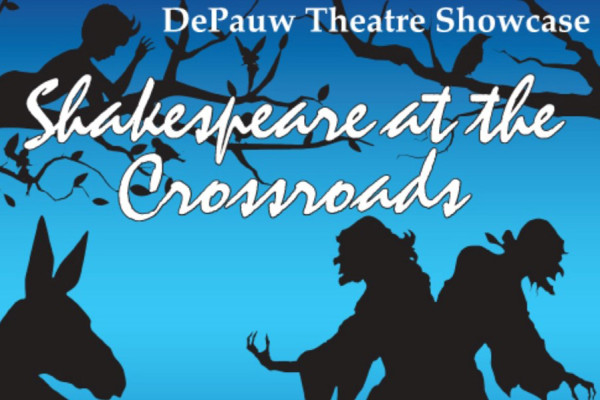
Shakespeare at the Crossroads
Location: The Green Center for Performing Arts, Kerr Theatre
Come join the fun as we bring the Bard of Avon's most iconic moments and beloved characters to life during the creation of this collaborative Showcase.
Free and open to the public.
Oct 1 - Dec 31, 2025
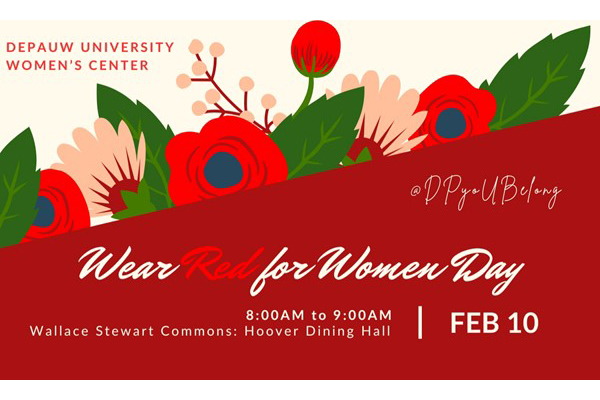
Wear Red for Women's Day
Location: Wallace Stewart
March 20, 2026
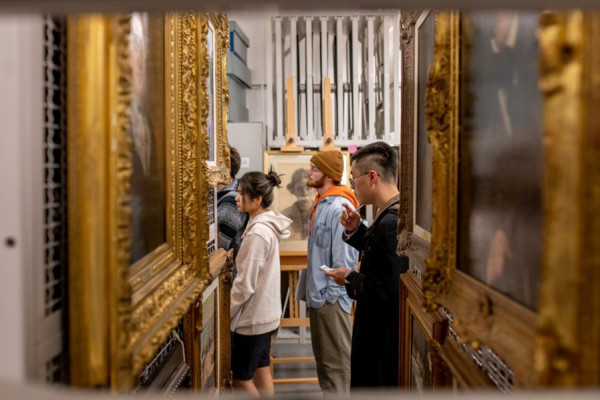
Behind the Scenes:
Location: The Richard E. Peeler Art Center
Explore the hidden treasures of DePauw University's Permanent Art Collection with exclusive 45-minute tours led by Christie Anderson, the collection's registrar. These tours offer a rare opportunity to view artworks not currently on public display.
April 2, 2026
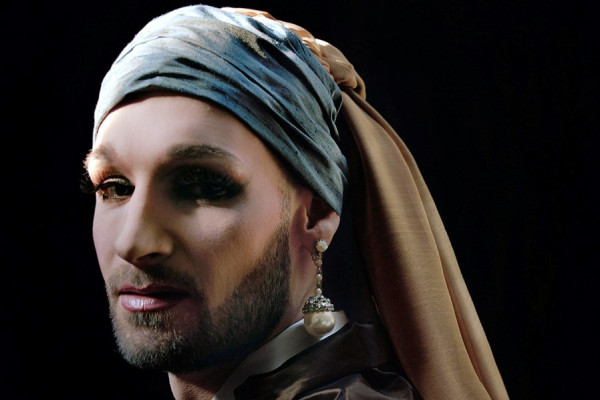
Niki Grangruth & James Kinser
Location: The Richard E. Peeler Art Center, Auditorium
Multimedia artistsNiki Granguth andJames Kinser share insights on how a revisionist approach to paintings from art history fed their exploration of gender expression and the power of the gaze. They will also provide an intimate look at their creative process over their 15-year collaboration on the Muse project comprising 15 large-format photograph and handmade costumes.