Beyond the Classroom: DePauw Learning Stretches Outward
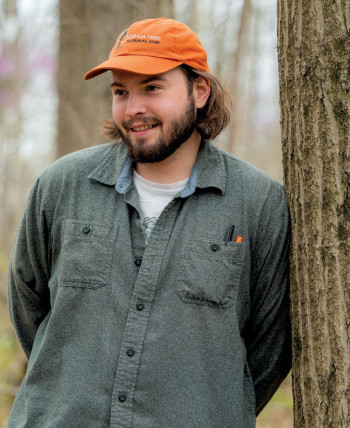
A young man in Kenya sits among a group of semi-nomadic Maasai as a freshly butchered goat roasts over an open fire. Another man walks down a bustling city street, surrounded by Taiwan’s unique cultural blend of tradition and technology. A third man kneels on the forest floor with tools spread beside him as he carefully extracts core samples from a tree trunk. And finally, someone lingers in Asbury Hall to chat with his religious studies professor after class about the most recent reading assignment.
Can you guess which one is the DePauw student?
If you said “all of the above,” you either have a knack for spotting trick questions, or your DePauw IQ is off the charts. Not only are all four DePauw students, they’re the same DePauw student: Tommy Manning ’26.
Manning’s experiences are anything but accidental. Throughout its history, DePauw has been an institution that intentionally cultivates educational opportunities like these, strategically placing students in dynamic learning environments. For Manning, these opportunities looked like a semester studying conservation in East Africa, ongoing hands-on research with a professor in the DePauw Nature Park and winter terms learning about global arts in Taiwan and classical traditions in Rome. For others, it might look like a four-month internship in Chicago, a weekly service initiative with a Putnam County nonprofit or a first-year seminar that sparks an unexpected passion for the field of psychology.
The vocabulary of higher education often refers to these opportunities as high-impact practices – educational strategies that promote deep learning and high levels of student engagement. Although specific examples can vary widely, most high-impact practices involve real-world elements that integrate academic knowledge and practical application. In contrast to some traditional stereotypes of the learning process as passive and unidirectional, high-impact practices encourage initiative, collaboration and mentorship.
It’s exactly what Manning was hoping to get out of his college experience.
As a Lilly scholar, Manning had plenty of educational options available to him, but DePauw stood out for one reason. “I was already thinking about studying abroad in Kenya before DePauw,” he says. “In my conversations with different schools after my Lilly scholarship, DePauw stressed the study abroad opportunities, and that was really attractive to me. I knew that was something I wanted in my education.”
The experience didn’t disappoint. After working on the front lines of endangered species conservation and immersing himself in Indigenous cultures, Manning immediately knew he had encountered a type of learning that would stick with him forever.
“The most important thing I’ve done – for my career, for my future – was to get that hands-on experience,” he says. “Now I know this is exactly what I want to do.”
To some in the DePauw community, the term “high-impact practices” might be new. But regardless of the vocabulary they use, almost every student and alum has a story that exemplifies the life-changing impact of these experiences.
Study Abroad
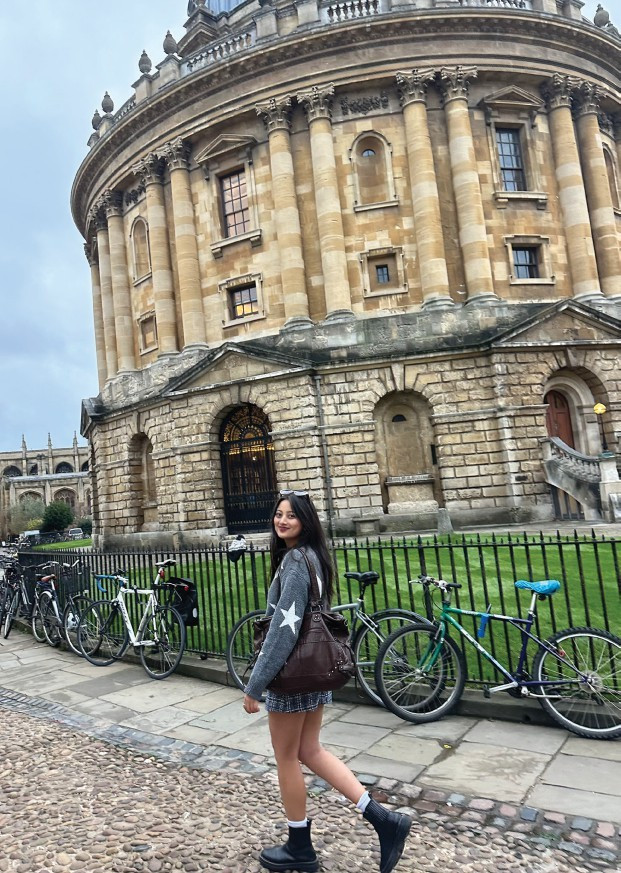 As an international student from Kathmandu, Nepal, Nushla Pradhan ’26 was already studying abroad just by showing up at DePauw. But when she had the chance to spend a semester at Oxford University in England, her world opened up in ways she never could have expected.
“I always knew I wanted to study abroad, and Oxford’s independent study approach really excited me,” she says. “Fueling this curiosity is one of the most rewarding things you can do for yourself as you are quite literally expanding your horizon by actively learning in a space that you didn’t grow up adapting to.”
One of the many highlights she experienced was taking Oxford’s traditional Bodleian Library oath in her primary language.
“Taking this solemn oath at one of the oldest libraries in the world in my first language felt like a symbolic moment that officiated my journey at Oxford as a student from Nepal,” she says.
Some of DePauw's top international off-campus study locations have recently included:
- Copenhagen, Denmark
- Edinburgh, Scotland
- Oxford, England
- Limerick, Ireland
- Prague, Czech Republic
- Vienna, Austria
- Rome, Italy
By the numbers:
- An average of 70 students have completed a full semester off campus each year since 2021.
- More than 300 students participated in some form of off-campus study last year.
- Fore more than 90 years, DePauw students have studied abroad, with the first programs launched in the mid-1930s.
- 130 off-campus programs are currently available to DePauw students.
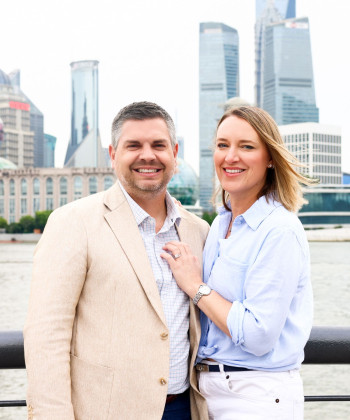
Tyson and Kady Clevenger Becker ’04 each spent a semester abroad while they were at DePauw, with Tyson going to Italy and Kady going to England.
“It was a formative experience for both of us to be outside our comfort zones. Seeing how much you grow in an environment like that stuck with us. We came back as changed people.”
That cross-cultural exposure established a foundation that eventually led them to Shanghai, where they lived with their children from 2021 to 2026 in connection with Tyson’s role as a vice president of General Motors. Living in China led them to become more insatiably curious and globally aware than ever.
Winter Term
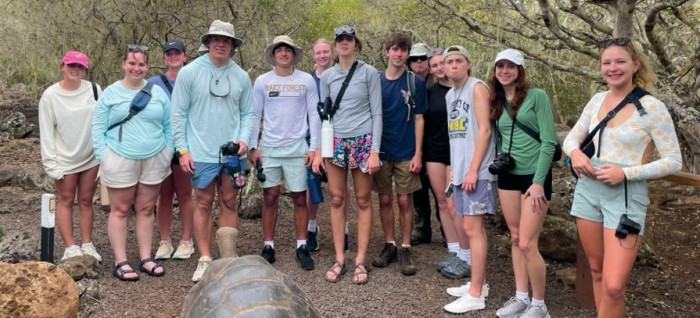
English professor Joe Heithaus has led winter term expeditions in Ghana, El Salvador, Costa Rica and New Mexico. This year, he added a new location to that list by partnering with biology professor Kevin Kinney on a trip to the Galapagos Islands. We asked him about the experience.
Q: What were the intended outcomes?
My expectation of the students was that they broaden their own understanding of evolution and see for themselves how important it is to preserve and protect biodiversity. I encouraged the students to use their journals not just to record in prose what they were seeing, but to engage by sketching, writing poetry, generating lists and finding creative ways to focus upon and remember all that we were experiencing.
Q: What stands out from your time with the students?
We had a haiku contest – a good-natured competition to see who might capture some of our experience in 17 or so syllables. Soon, students who had never written a poem before were deeply engaged not just writing one poem, but many. And they couldn’t wait to share.
Q: Why is it worthwhile for undergraduates to encounter such an iconic location?
The Galapagos is perhaps the most important place on earth, not just a symbol of biodiversity, but as a protected place that honors nonhuman life in a way one can only fully understand by being there. The preciousness and precarity of nonhuman life is palpable.
Q: How does an experience like this shape a student during their time at DePauw and beyond?
Winter term is a time to slow down – or maybe to speed up – and see, experience and live in a way very different than we would otherwise. These students can close their eyes for an instant for the rest of their lives and see themselves swimming beside penguins, sea lions, sharks or flightless cormorants. That will not only serve them as they read and learn and live at DePauw, but I hope it will lead them to always make choices that favor the preservation of all species.
Not all winter term experiences require a passport and an airplane. Every January students explore new worlds of knowledge without leaving Greencastle. Through intensive on-campus courses, they’re able to dive into a subject that interests them while also engaging with peers in conversation and collaboration.
“I appreciated the ways we debated and the ways we talked about things openly and honestly,” says Kam Shiver ’29, a student in Timothy Barr’s recent winter term course on the literary genre of aphorisms. “In one specific discussion we got into some deep topics that are really hard to talk about. But everyone handled it so well. It showed us that when you approach things with an open mindset and kindness – instead of just looking to argue with someone – you can learn a lot.”
Outcomes like this are no accident. They’re an essential part of the winter term model and high-impact practices.
“This class is organized around a way of processing all the uncertainty of life,” says Barr, assistant professor of communication and theatre. “This is precisely the difference of a liberal arts education: It prepares you not only for your career, but also for your early mornings and difficult nights, your best and worst years.”
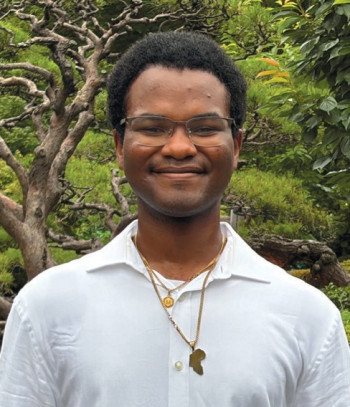 Steeve Nsangou ’25 first encountered Japan during a winter term travel course with professors Hiroko Chiba and Dave Berque. While there, Nsangou was captivated by the Japanese attention to detail and the way the country preserved its cultural heritage while also making remarkable engineering advancements. That experience ignited Nsangou’s curiosity and forged an unexpected relationship with a place he might otherwise never have visited. After multiple return trips, Nsangou most recently completed a year-long Fulbright fellowship in Japan, where he studied the relationship between music and human emotions using machine learning and kansei (affective) engineering principles.
Service and Leadership
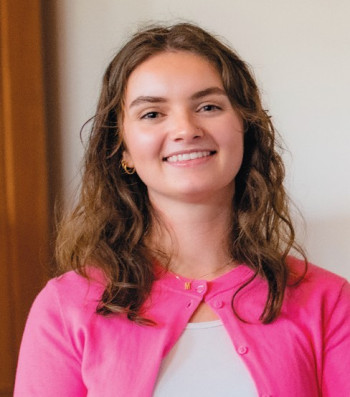 After studying biology and global health at DePauw, Margaret Reed ’26 envisions a future working with animals through veterinary medicine. It’s a career she’ll be well prepared for, thanks in large part to the hundreds of hours she’s already spent serving community organizations and accumulating hands-on experience.
Throughout her time at DePauw, Reed volunteered at the Putnam County Humane Society as well as the Lakeland Center, a local equine therapy facility. In these roles she led renovation projects, raised funds, built relationships and developed a deep sense of connection to the community members these organizations serve.
“I hope my service will leave a mark,” says Reed. “I would definitely say that I am now not just a part of the DePauw community, but I’m also a part of the Greencastle community and Putnam County community.”
“As a DePauw student, most of my life happened inside the campus bubble – but Greencastle was in that bubble with me, through the neighbors, business owners and townspeople whose lives kept overlapping with mine. It wasn’t until I left after graduation that I realized how much those people had shaped me, and how much I’d already started to belong here. That’s why I came back to build a business and raise my family in Greencastle, and it’s why I tell current students that the community doesn’t stay separate from your college experience – it’s already part of it, whether you see that yet or not.”
– Vincent Aguirre ’12, president of Greencastle web design agency Distinct and member of the Greencastle Common Council
DePauw has long been a leadership incubator, and that legacy is set to continue for years to come, thanks to programs like the Sanger Leadership Initiative.
“The Sanger Leadership Initiative helps us be intentional about the core of our mission at DePauw,” says Rebecca Alexander, the program’s director. “It helps us ensure all students have access to extraordinary leadership learning experiences both within and beyond the classroom. We support students to not only practice leadership, but also to better understand and tell the story of how their experiences here are shaping their leadership values, philosophy, approach and vision in unique and unparalleled ways.”
Raechel Meyers ’28 is one of the students reaping the benefits of these resources. “The Sanger Leadership Initiative has pushed me out of my comfort zone and toward the version of myself that I hope to become,” says Meyers. “I have a better understanding of what opportunities lie ahead of me as a leader, a young professional and a member of the community that enriches my life.”

The Sanger Leadership Initiative invests in student development, facilitates intentional dialogues across campus and sparks new curricular innovation – including three practicum courses recently designed to use the campus as a laboratory for thinking about leadership.
Alexander sees these outcomes as a reflection of DePauw’s ongoing culture of engagement. She quotes Karen Sanger ’68, whose support helped launch the initiative, saying, “Our students don’t sit on the sidelines at DePauw.”
Research and Capstones
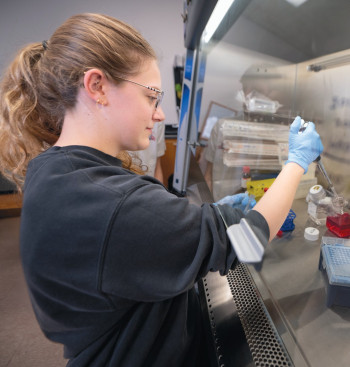 Not many undergraduate students have the opportunity to take part in groundbreaking cancer research, but Lydia Neven ’27 did. In partnership with Colleen Doçi, Elizabeth P. Allen Distinguished Professor and associate professor of biology, Neven studied how a compound synthesized by DePauw’s chemistry department interacts with cancer cells – a project that could inform future cancer treatment options.
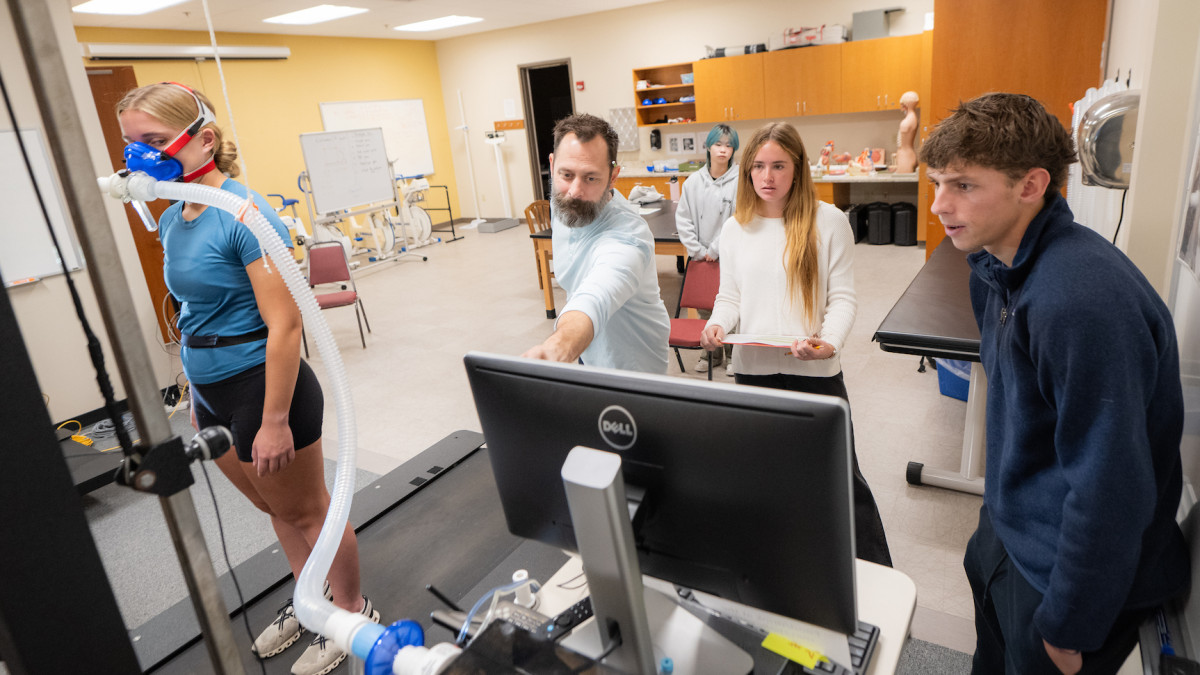
“Our primary objective is student engagement; our second is research. That might mean I could get the research done faster by myself as opposed to taking eight weeks longer if I have a student helping out. But that trade-off is the mission of DePauw. That trade-off is why we’re here. It’s what we believe in. It’s what we value. And it’s the reason that particular student came to DePauw in the first place.”
–Brian Wright, associate professor of kinesiology
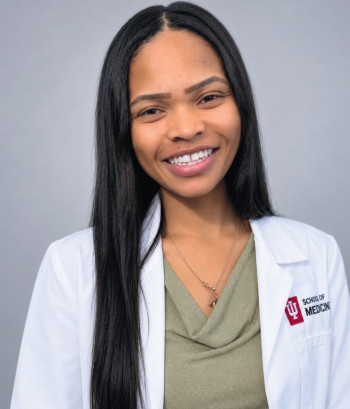
Before Brittany Davis ’20 began her studies at the Indiana University School of Medicine, she built a broad foundation of undergraduate experiences that included service as a STEM guide, a global health internship in Ecuador and the chartering of multiple student organizations. But one of the most important aspects of her DePauw experience was the access to meaningful student research that she enjoyed.
“It’s a blessing for sure,” says Davis. “It’s an opportunity that was afforded by DePauw that other universities might not offer. Many people say to me, ‘Wow, you’ve done a lot of research!’ But it was just part of my week. I would go to class, and then I would go to the lab, where I was allowed to jump in and learn a project.”
Although Davis wasn’t sure at the time that these research opportunities would lead her to medical school, she now realizes that it was part of a comprehensive process that continues to pay dividends in ways she couldn’t have expected.
“Once you’ve left DePauw, every class means something – every extracurricular, even if it seems disjointed and unrelated, it actually shapes your future.”
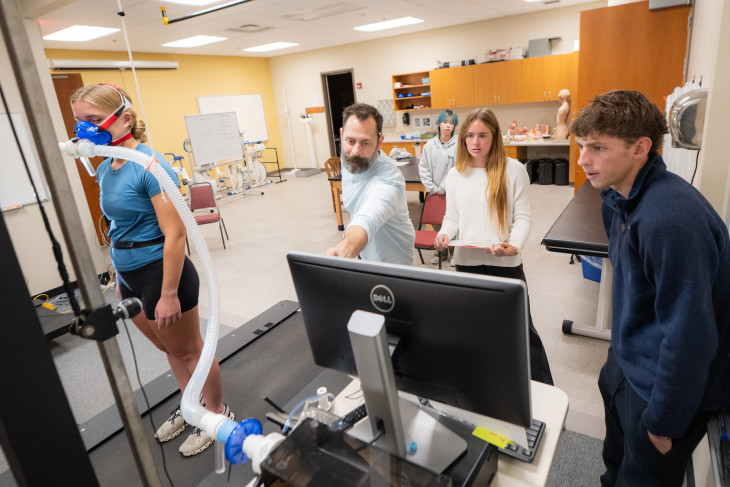
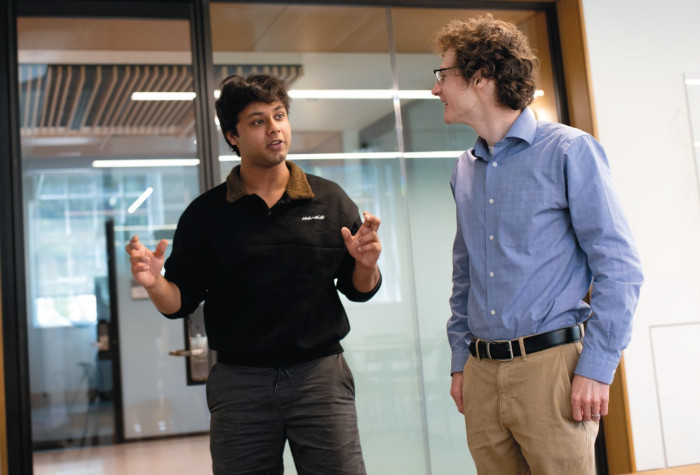 Umer Hammad ’28, left, spent his summer working with Ryan Rudderham, assistant professor of economics and management and co-director of the Asher Office of Undergraduate Research, Scholarship and Creative Activity. Together, they explored the prevalence of self-employment in developing economies. Hammad drew on his computer science background to code the economic model they used, creating important data visualizations for the project.
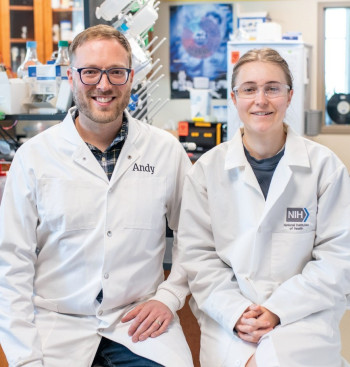 Student research – including a research internship overseas – was an integral part of the DePauw experience for Andy Kehr ’09. Now, as an assistant professor of chemistry and biochemistry at DePauw, Kehr is ensuring that a new generation of students has access to the same opportunities. One of his students, Amelia McLaren ’27, is even conducting research in Germany through the same program Kehr was part of as an undergraduate two decades earlier.
Honor Scholar and Fellows Programs
Regardless of a student’s academic focus or career trajectory, DePauw’s honor scholar and fellows programs provide outlets for deep discovery and connection with others.
Honor Scholar: An interdisciplinary space where a student’s curiosity can run free, culminating with the design and completion of an ambitious yearlong project during senior year.
Environmental Fellows: A community of students and mentors who seek to understand how environmental and sustainability issues intersect with our world’s most pressing challenges.
Global Studies Fellows: An invitation to integrate any area of study with the global perspective and cross-cultural awareness that will prepare tomorrow’s leaders to thrive in any setting.
Management Fellows: A comprehensive introduction to the world of leadership, entrepreneurship and business, featuring a semester-long internship during junior year.
Media Fellows: A training ground where students can discover the theory and practice of media in all its forms, from radio and television to journalism and publishing.
Science Research Fellows: An opportunity to supplement coursework in the sciences with immersive, hands-on experience in the lab in preparation for graduate school or a career in research.
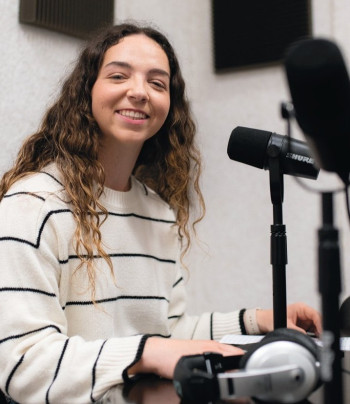 Peyton Rohr ’27 isn’t waiting around to pursue her dream of working in sports journalism or communications. As a media fellow at DePauw, she’s already building an extensive portfolio and banking valuable experience. She’s active in D3TV, she writes for The DePauw, and she supports the athletic department by contributing game recaps and feature stories.
Rohr’s journey as a media fellow even took her beyond campus, where she spent a semester with the New York Arts Program. There, she worked for New York University athletics communications and as a journalist for a hyperlocal independent newspaper.
“Everything I did felt like a real-world extension of the things I’d been learning in class and the studio at DePauw,” says Rohr. “Having worked for both DePauw and NYU athletics, I have a sense for two different environments and realize that I can adapt to whatever someone throws at me.”
Invigorating.” That’s the word Tom Kominsky ’03 uses to describe his regular trips back to campus to guest-teach high-level courses on business and leadership at his alma mater. Kominsky is the chief financial officer at Kenco, one of North America’s largest third-party logistics firms, and for several years he has brought his wealth of real-world experience back to DePauw to share with current students in the Management Fellows Program.
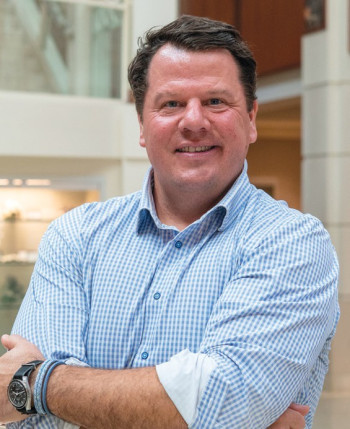
“On this visit, we discussed a business strategic framework and talked about it in connection to crucial decisions I had to make just last week,” Kominsky said after a recent class session on campus. “These were decisions that can change the trajectory of our business. In this class, I can lay those scenarios out and talk about how we made these decisions. And the students, as undergrads, can engage with what they’ve read and have a strong dialogue about our decisions and strategy and how this MBA-level course material applies.”
Kominsky was a management fellow during his time at DePauw, and he embodies the pay-it-forward mentality of the program. In addition to the time he spends in the classroom, Kominsky has also hosted more than a dozen interns, giving him a front row seat to the unique qualities that allow these students to thrive.
“The Management Fellows program prepares students to do more than just hit the ground running as an intern,” he says. “They quickly become valued team members, making an impact within just 16 weeks.”
Internships
When Joey Vehovsky ’27 and Bennett Smith ’27 started their semester-long internships at Founders Mosaic, a small private equity firm based in Indianapolis, they were intimidated by the prospect of working directly with executives around the country.
“At first, I was definitely daunted,” says Vehovsky. “I’m a junior in college, and these people have been working in the industry for 20-plus years.”
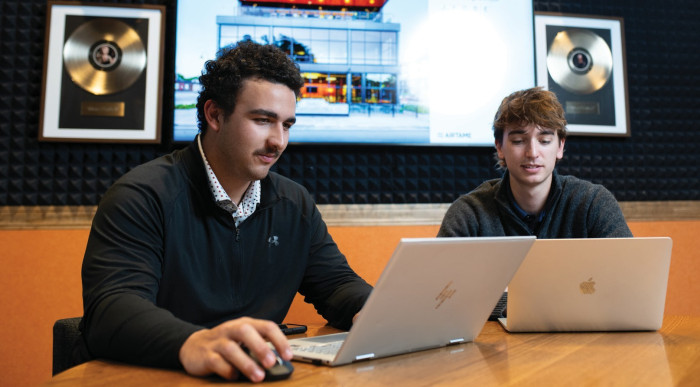
But Vehovsky and Smith quickly learned that their liberal arts education had given them the analytical tools – and, more importantly, the relational skills – to bring value to the portfolio companies they worked with. They also proved themselves to be an instrumental part of the Founders Mosaic team.
“Working at a smaller company, you have the ability to make a larger impact,” says Smith. “Becoming more independent is one of the biggest things I’ve gained from this experience.”
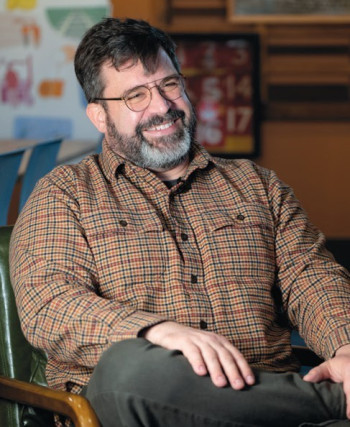 “I did four internships, three of which were with DePauw alums. I think back to being 21, living in London, working for Ernst & Young, getting paid and learning all sorts of skills. It’s definitely a cycle, and now my job is to pay it back in the same way those who were before me gave me opportunities that outsized my worth.”
– R.J. Talyor ’02, founder of artificial intelligence email marketing company Backstroke and host of DePauw interns
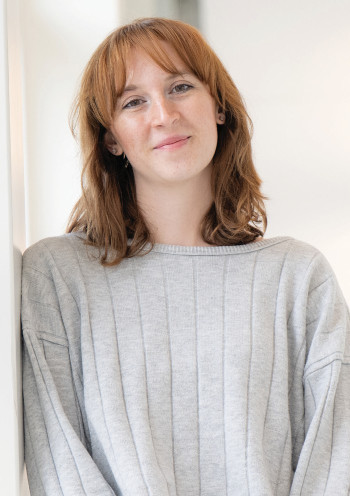 Day to day I was doing anything I could to help our 35 endorsees win their campaigns,” says Bella Zollner ’27. She spent her most recent summer in Washington D.C., as a political intern for The First Ask, a political action committee that endorses progressive women running for state office.
“I might do opposition research in the morning, cover legislative updates midday and wrap up with donor research before going home,” she says. “I want to work in Democratic campaigns, so this internship was seriously the best opportunity I could have had. I’m not just working on one campaign; I’m helping out 35!”
In addition to providing practical, on-the-job experience, Zollner’s internship allowed her to experience life at the epicenter of American politics.
“Immersing myself in D.C.’s culture has taught me how to network and speak confidently about my work. I’m grateful to be in a city that so many inspiring people call home.”
DePauw Magazine
Fall 2026
 What I'm Reading
 Beyond the Classroom: DePauw Learning Stretches Outward
 Increasingly Human
DePauw Stories
A GATHERING PLACE FOR STORYTELLING ABOUT DEPAUW UNIVERSITY
Browse other stories
-
Athletics
-
Football - Green Named NCAC Defensive Athlete of the Week and to the D3football.com Team of the Week
-
Men's Golf - Tigers Finish Fifth in Final Fall Tournament
-
Volleyball - DePauw Rallies for a 3-1 NCAC Win over Denison
More Athletics
-
-
News
-
DePauw and Wabash Announce Venue for 132nd Monon Bell Classic
-
DePauw Earns Positive Outlook from Moody's, Backed by Record Philanthropy and Financial Growth
-
DePauw Students Return to Top Three of Risk Management Competition
More News
-
-
People & Profiles
-
In Brian Wright’s Lab, Student Research Meets Real-World Impact
-
Empie, Party of Five: One Family’s Unique DePauw Bond
-
Entrepreneurs Eric Fruth ’02 and Matt DeLeon ’02 Are Running More Than a Business
More People & Profiles
-
-
Have a story idea?
Whether we are writing about the intellectual challenge of our classrooms, a campus life that builds leadership, incredible faculty achievements or the seemingly endless stories of alumni success, we think DePauw has some fun stories to tell.
-
Communications & Marketing
101 E. Seminary St.
Greencastle, IN, 46135-0037
communicate@depauw.eduNews and Media
-
News media: For help with a story, contact:
Bob Weaver, Senior Director of Communications.
bobweaver@depauw.edu.